






Newsletter
New Board 2026: Basak Ceyda Meço
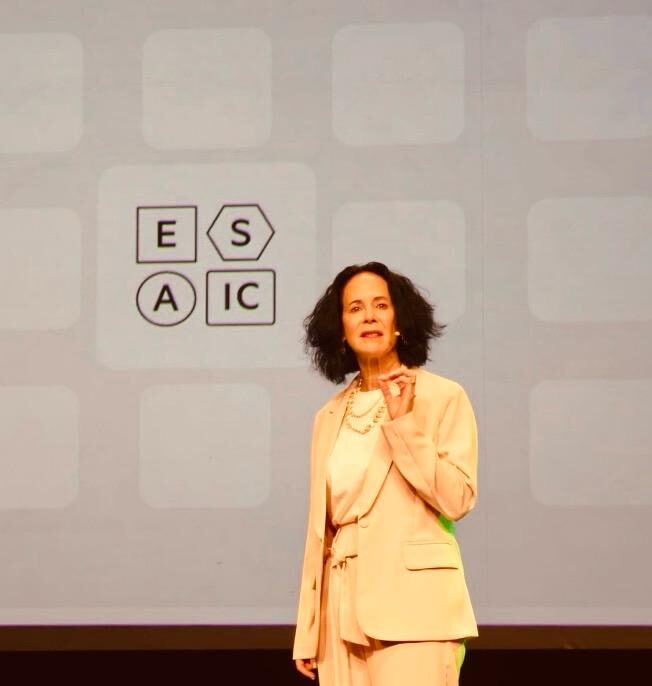
Prof. Basak Ceyda Meço — ESAIC Board Member 2026
In this interview, Prof. Basak Ceyda Meço shares her vision, priorities, and motivations for her ESAIC mandate, highlighting how she aims to advance education, research, leadership, and collaboration across European anaesthesiology and intensive care.

What prompted you to reflect on the role of patients in perioperative care?
Everything began with our Aim of Anaesthesia project, where we set out to answer a fundamental question: what is our aim as anaesthesiologists?
How do you see the role of anaesthesiologists evolving today?
For me, this question comes at a pivotal moment for medicine and for our specialty. Anaesthesiology has quietly evolved far beyond the operating room. We are no longer guardians of a moment in time, but stewards of the entire perioperative journey. Yet while our responsibilities have expanded, the way we define and demonstrate our value has not always kept pace. To deliver truly high-quality, safe, and equitable perioperative care, we must reconnect our clinical expertise with what matters most to patients. Patient-Reported Outcome Measures (PROMs) and Patient-Reported Experience Measures (PREMs) are not administrative tools; they are mirrors that reflect the real impact of our work.
What key question emerged from your Delphi study on physicians’ aims?
While conducting our Delphi study to define physicians’ aims, another question emerged: what about patients’ aims and expectations? This question challenges us to broaden our perspective and to truly listen to those we care for.
How should the perioperative period be understood, and what does that mean for patient engagement?
We now understand the perioperative period as a true continuum: it begins at home, extends through surgery, and continues long after discharge. Our aim should be to engage patients throughout this journey, enabling them to contribute actively to safer, more personalised care through continuous feedback. This is not additional work; it is the missing link between what we do and how its value is perceived.
What role should the ESAIC play in integrating patient perspectives?
I believe it is time to systematically integrate clinical excellence with the lived experience of patients within the ESAIC. Bringing patients on board in a meaningful way is not symbolic , it is strategic. Identifying appropriate patient representatives, listening deeply to their perspectives, and including them as genuine members of the perioperative team must become a central priority.
What initiatives will you focus on in the coming year to strengthen patient involvement?
In the coming year, I will lead projects that deepen our understanding of patient perspectives, translate them into practical, measurable improvements in care, and implement approaches that bring patients into our teams as partners. Identifying appropriate patient representatives, listening to their voices, understanding their aims and expectations, and including them as true members of the care team are our central priorities. By doing so, we not only improve outcomes but we restore professional meaning, visibility, and confidence within anaesthesiology.
What is your long-term vision for perioperative care within the ESAIC?
Together, the ESAIC team will lead an initiative for a stronger, more responsive, and more humane perioperative system where every patient’s voice is heard, valued, and acted upon.