





Newsletter
A Transformative ESAIC Exchange Experience at Royal Papworth Hospital
An ESAIC Exchange Experience in Cardiothoracic Anaesthesia
International clinical exchange programmes play a crucial role in broadening professional perspectives, enhancing clinical competence, and fostering collaboration across healthcare systems. Through the ESAIC Exchange Programme, I had the privilege of undertaking a three-month clinical fellowship at Royal Papworth Hospital NHS Foundation Trust, one of the leading cardiothoracic referral centres in the United Kingdom. This experience was not only professionally enriching but also personally transformative, offering invaluable exposure to advanced cardiothoracic anaesthesia within a highly supportive and structured system.
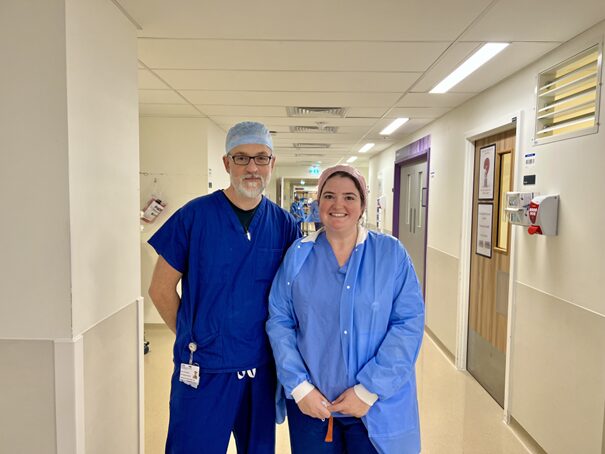
Thanks to holding the ESAIC Diploma, I was eligible for General Medical Council (GMC) registration, which allowed me to participate in a fully hands-on clinical role throughout the fellowship. This opportunity significantly enhanced the depth of my learning, enabling active involvement rather than observational participation. While the prospect of working in a new country within an unfamiliar healthcare system initially appeared challenging and demanding, the hospital’s comprehensive induction programme and continuous institutional support made the transition remarkably smooth.
From the outset, Royal Papworth Hospital demonstrated a strong commitment to integrating international fellows into the clinical workforce. Beginning the fellowship alongside other clinical fellows fostered a sense of belonging and peer support. Each stage of the process—from induction and rota allocation to clinical supervision—was clearly structured and thoughtfully delivered. This approach greatly reduced the initial stress associated with adapting to a new environment and allowed me to focus on learning and clinical performance.
A particularly significant aspect of my experience was the outstanding mentorship provided by my clinical supervisor, Dr Thomas Chloros. His guidance, approachability, and consistent support were instrumental throughout the fellowship. Under his supervision, I felt encouraged to ask questions, expand my practical skills, and engage in reflective learning. His mentorship not only facilitated professional development but also made the overall experience both rewarding and enjoyable.
Royal Papworth Hospital is a cardiac-focused cardiothoracic centre with a strong emphasis on advanced and highly specialised procedures. As a national and international referral centre, the hospital manages some of the most complex cardiothoracic cases. During my fellowship, I was fortunate to be directly involved in anaesthesia for six lung transplantations and one heart transplantation, as well as a wide range of complex surgical procedures. These included pulmonary endarterectomy, frozen elephant trunk procedures, complex valvular heart surgeries, and robotic thoracic surgery.
Exposure to such a diverse and complex caseload significantly enhanced my clinical confidence and technical competence. Working within a multidisciplinary team of experienced anaesthetists, surgeons, perfusionists, and intensivists allowed me to appreciate the importance of teamwork and communication in managing high-risk patients. Each case offered unique learning opportunities, particularly in advanced haemodynamic monitoring, perioperative optimisation, and decision-making in complex scenarios.

Although the fellowship was primarily theatre-based, I actively sought opportunities to gain a more holistic understanding of patient care. With this aim, I spent part of my programme working in the cardiothoracic intensive care unit (ICU). This experience allowed me to observe and participate in the pre-operative and post-operative continuum of care, strengthening my understanding of perioperative medicine as an integrated process rather than isolated events.
In the ICU, I encountered numerous complex cases, including patients following cardiac arrest, those requiring extracorporeal membrane oxygenation (ECMO) support, and patients recovering from major cardiothoracic surgery. Managing such critically ill patients provided valuable insights into advanced organ support, post-operative complications, and long-term recovery pathways.
Education and training formed a core component of the fellowship experience. The department placed strong emphasis on continuous professional development, ensuring that fellows were actively encouraged to participate in ongoing teaching sessions, tutorials, and departmental meetings. Active involvement in these teaching activities accelerated my adaptation to the system and maximised the educational benefit of the programme.
One area in which I experienced particularly substantial growth was transoesophageal echocardiography (TOE). Through structured teaching, case-based discussions, and practical exposure, I was able to deepen both my theoretical knowledge and practical understanding of TOE.
Reflecting on the entire experience, I feel exceptionally fortunate to have had the opportunity to work in a different country, within a distinct healthcare system, while being fully integrated into clinical practice. The ESAIC Exchange Programme provided a rare chance not only to develop technical skills but also to gain new perspectives on clinical governance, teamwork, patient safety, and medical education.
Such exchange programmes open doors to professional growth that extend far beyond clinical expertise. They foster adaptability, cultural awareness, and a broader understanding of global medical practice. For anaesthetists seeking to challenge themselves, expand their horizons, and enhance both clinical and personal development, the ESAIC Exchange Programme represents an opportunity that should not be missed.
Author
- Dilan Buyuk, Honorary Clinical Fellow, Consultant Anaesthesiologist