

Login to myESAIC Membership
Back

About

The ESAIC is dedicated to supporting professionals in anaesthesiology and intensive care by serving as the hub for development and dissemination of valuable educational, scientific, research, and networking resources.


Back

Congresses

The ESAIC hosts the Euroanaesthesia congresses that serve as platforms for cutting-edge science and innovation in the field. These events bring together experts, foster networking, and facilitate knowledge exchange in anaesthesiology, intensive care, pain management, and perioperative medicine. Euroanaesthesia is one of the world’s largest and most influential scientific congresses for anaesthesia professionals. Held annually throughout Europe, our congress is a contemporary event geared towards education, knowledge exchange and innovation in anaesthesia, intensive care, pain and perioperative medicine, as well as a platform for immense international visibility for scientific research.


Back

Professional Growth

The ESAIC's mission is to foster and provide exceptional training and educational opportunities. The ESAIC ensures the provision of robust and standardised examination and certification systems to support the professional development of anaesthesiologists and to ensure outstanding future doctors in the field of anaesthesiology and intensive care.


Back

Research

The ESAIC aims to advance patient outcomes and contribute to the progress of anaesthesiology and intensive care evidence-based practice through research. The ESAIC Clinical Trial Network (CTN), the Research Groups and Grants all contribute to the knowledge and clinical advances in the peri-operative setting.


Back

EU Projects

The ESAIC is actively involved as a consortium member in numerous EU funded projects. Together with healthcare leaders and practitioners, the ESAIC's involvement as an EU project partner is another way that it is improving patient outcomes and ensuring the best care for every patient.


image of a stethoscope laying on the european flag
Back

Sustainability

The ESAIC is committed to implementing the Glasgow Declaration and drive initiatives towards greater environmental sustainability across anaesthesiology and intensive care in Europe.


Back

Partnerships

The ESAIC works in collaboration with industry, national societies, and specialist societies to promote advancements in anaesthesia and intensive care. The Industry Partnership offers visibility and engagement opportunities for industry participants with ESAIC members, facilitating understanding of specific needs in anaesthesiology and in intensive care. This partnership provides resources for education and avenues for collaborative projects enhancing science, education, and patient safety. The Specialist Societies contribute to high-quality educational opportunities for European anaesthesiologists and intensivists, fostering discussion and sharing, while the National Societies, through NASC, maintain standards, promote events and courses, and facilitate connections. All partnerships collectively drive dialogue, learning, and growth in the anaesthesiology and intensive care sector.


Upcoming external & endorsed events

Back

Guidelines

Guidelines play a crucial role in delivering evidence-based recommendations to healthcare professionals. Within the fields of anaesthesia and intensive care, guidelines are instrumental in standardizing clinical practices and enhancing patient outcomes. For many years, the ESAIC has served as a pivotal platform for facilitating continuous advancements, improving care standards and harmonising clinical management practices across Europe.


Back

Publications

With over 40 years of publication history, the EJA (European Journal of Anaesthesiology) has established itself as a highly respected and influential journal in its field. It covers a wide range of topics related to anaesthesiology and intensive care medicine, including perioperative medicine, pain management, critical care, resuscitation, and patient safety.


Back

Membership

Becoming a member of ESAIC implies becoming a part of a vibrant community of nearly 8,000 professionals who exchange best practices and stay updated on the latest developments in anaesthesiology, intensive care and perioperative medicine. ESAIC membership equips you with the tools and resources necessary to enhance your daily professional routine, nurture your career growth, and play an active role in advancing anaesthesiology, intensive care and perioperative medicine.


Membership opportunities
at the ESAIC

woman showing another woman something on her computer in a hospital
Important Notice

Disclaimer

The ESAIC Examinations Committee is aware of certain initiatives claiming to be related to the EDAIC that are neither organised nor authorised by the ESAIC. We strongly recommend that you invest your time in the official ESAIC initiatives listed on the ESAIC website. ESAIC accepts no responsibility for the quality of any non-ESAIC courses.

Newsletter

Reflections from a Two-Month Observership: Clinical and Cultural Insights 

Deniz Kaya Bilir

My name is Deniz Kaya Bilir. I completed my anaesthesiology residency approximately two years ago and currently work as an anaesthesiologist in Turkey. Between the first week of February and the first week of April, I had the opportunity to participate in a two-month observership at Amsterdam UMC through the ESAIC Exchange Programme. This experience provided me with valuable clinical and cultural insights. 

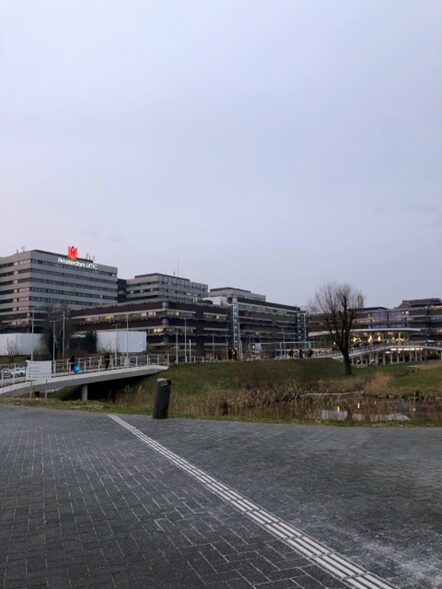
The hospital is easily accessible by metro from the centre of Amsterdam. Despite its large size, the hospital was exceptionally clean and well-organised. On my first day, Professor Benedikt Preckel warmly welcomed me, took note of my background and experience, and asked about my expectations. He gave me a brief tour of key areas such as the operating theatres and meeting rooms—though it was impossible to see everything due to the hospital’s vast size. I completed the necessary administrative procedures, and my access badge was issued. 

aaa3

Given the department’s structure, staff rotate daily across different specialities. I was added to this rotation list, which allowed me to observe various anaesthesia practices across multiple disciplines. I was also included in the hospital’s email system, enabling me to see my assigned area a day in advance and prepare accordingly. I was informed that I could request specific rooms or cases, but I preferred to experience the general workflow rather than focusing on a particular field. 

From the very beginning, I was impressed by how smoothly I integrated into the clinical environment. Colleagues were welcoming, fluent in English, and encouraged me to ask questions and participate in discussions, which made me feel included and confident throughout the programme. 

Having previously worked only in Turkey, I was particularly interested in practices that differed from those in my home country. Sustainability is clearly prioritised in anaesthesia; volatile agents like sevoflurane are minimised, with TIVA using propofol being common. The presence of an active ‘green team’ committed to minimising anaesthetic gases and promoting sustainable practices inspired me to reflect deeply on the environmental impact of our clinical choices. Opioid preferences also differ—while fentanyl and morphine are common in Turkey, sufentanil is frequently preferred here, and methadone has been recently introduced in specific cases. Regional techniques, especially peripheral nerve blocks, are frequently and effectively integrated into routine care. The calm, well-structured recovery areas—with dim lighting, low noise levels, and child-friendly environments in paediatric sections—seemed to reduce the need for anxiolytics, as patients appeared noticeably more relaxed. 
aaa2

These clinical approaches are supported by the healthcare system’s structure. The referral-based family medicine model results in fewer patients per clinician per day. Elective surgeries often involve waiting periods of several months, which patients generally accept. Night shifts are shorter, and daily workloads are lighter compared to Turkey, where higher patient volumes demand a faster pace. 

Outside the hospital, Amsterdam exceeded my expectations with its livability and charm. Acquiring a second-hand bicycle was perhaps my best decision during these two months; cycling through canals, quiet neighbourhoods, and parks became a daily joy. After my observership ended, I stayed a few more days and was lucky enough to catch the beginning of tulip season, which gave me the chance to visit the beautiful tulip fields. The city’s vibrant culture, world-renowned museums, and easy access to other Dutch cities for weekend trips enriched my experience. While Dutch cuisine may not be globally famous, Amsterdam offers a wide range of excellent cafes and restaurants for food enthusiasts. The Dutch people were exceptionally friendly and spoke perfect English, which made social interactions effortless. 

I am deeply grateful to the ESAIC Exchange team and Professor Preckel for this opportunity. Living in Amsterdam, not as a tourist but as part of the local community – commuting to work, observing healthcare practices in a different culture- was truly invaluable. I actively encourage younger colleagues worldwide to pursue similar experiences. I would be happy to assist anyone interested in joining this programme or seeking insights about Amsterdam. 

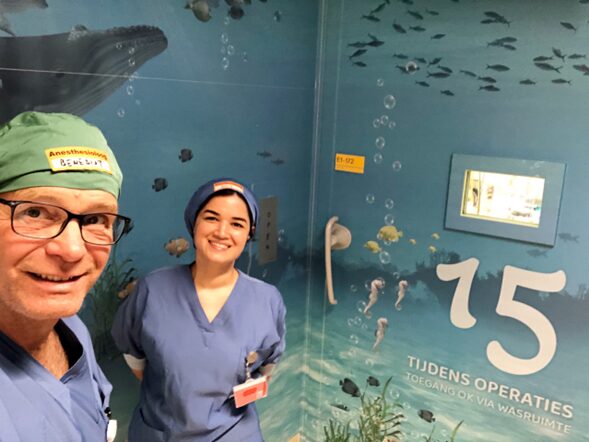
I have also included a few photos capturing moments from both my observership and daily life in Amsterdam. 

Author

  • Deniz Kaya Bilir, Anaesthesiologist, Yerköy State Hospital