







Newsletter
The Peripartum Crisis
The peripartum period carries the risk of rapid deterioration into severe maternal morbidity (SMM), contributing to adverse maternal and fetal outcomes. Causes are diverse and may arise in the antepartum, intrapartum, or postpartum period, occurring across both prehospital and in-hospital settings. (1)(2)(3) Although rare, these life-threatening events demand standardised multidisciplinary approaches to diagnosis, resuscitation, and treatment, anaesthesiologists occupying a central role in leading obstetric emergencies and applying expertise in resuscitation, human factors, and critical care to optimise outcomes for mother and child. (4)
In the lightning talk, “The Peripartum Crisis”, the speakers will cover situations that may lead to crises during the peripartum period. It will provide updates on the management of critical events in obstetric settings and offer expert insights into the diagnosis and treatment of conditions associated with adverse maternal outcomes.
Dr. Henrik Jörnvall is Consultant Anaesthesiologist and head of the department of Obstetric Anaesthesia at Karolinska University Hospital, Stockholm. He is also a clinician on Stockholm’s physician-staffed rapid response vehicles (RRVs) and has long-standing involvement in international emergency obstetric care through the Life Support Foundation, which he co-founded with colleagues from the Karolinska Institute. The Foundation’s aims include improving access to and quality of emergency obstetric care and resuscitation of mothers and newborn babies in low-income countries. (5) He is a co-author on a 2023 study characterising the activity of Stockholm’s RRV service. (6) He is also co-author of a 2024 paper examining paediatric cases encountered by Stockholm’s physician-staffed prehospital units. (7)
In his presentation, “Prehospital obstetric emergencies: anaesthetic and critical care perspectives”,
Dr. Jornvall will address the scarcity of research and the lack of data available regarding prehospital obstetric cases. He will present the essential dos and don’ts of attending these types of emergencies and will focus on the complexity of medical practice in the low-resource and low-options arena of managing critical events in prehospital care environments.
In the presentation “Seizing control: anaesthetic strategies in eclampsia management,” Prof. Dr. Sarah Devroe will provide a clinically focused update on the anaesthetic dimensions of eclampsia management. Prof. Dr. Devroe is an obstetric anaesthesiologist at the University Hospitals of KU Leuven, Belgium, where she works within the Department of Anaesthesiology and the Department of Cardiovascular Sciences. She is a prolific researcher in obstetric anaesthesia and is internationally active in professional collaboration. She is a named co-author on the 2024 OAA guidelines on intrathecal catheter placement after inadvertent dural puncture. (8)
Eclampsia represents one of the most acute and critical events on the labour ward. Prof. Devroe will emphasise a structured and time-critical approach, focusing on rapid stabilisation, airway management, seizure control, and haemodynamic optimisation. She will highlight that diagnosis remains primarily clinical and may occur even in the absence of classical features, underlining the importance of early recognition. Prof. Devroe will present updates on eclampsia management, including the central role of magnesium sulphate as first-line therapy for seizure treatment and prevention, alongside targeted antihypertensive management. The session will also address the airway implications of severe pre-eclampsia, including intubation challenges, with particular attention on anticipating and managing the difficult airway and controlling the hypertensive response to induction. She will advise on the choice of neuraxial versus general anaesthesia for delivery in active or recent seizures, emphasising an individualised, context-specific risk–benefit approach. Additional focus will be on haemodynamic management during neuraxial anaesthesia, including spinal-induced hypotension, vasopressor choice, and tailored fluid management, potentially supported by point-of-care ultrasound.
Dr. Nuala Lucas is a Consultant Anaesthetist at Northwick Park Hospital (London North West University Healthcare NHS Trust), and one of the most prominent voices in UK obstetric anaesthesia. She is the President of the Obstetric Anaesthetists’ Association and the anaesthetic co-lead for the UK Confidential Maternal Death Enquiries (MBRRACE-UK). Dr. Lucas is a senior editor for the International Journal of Obstetric Anesthesia. She has published on perioperative management in preeclampsia and the safety and efficacy of anaesthesia techniques during childbirth. (9) Dr. Lucas will present “When seconds count: managing maternal collapse in non-obstetric settings”. This talk addresses a specific gap: what happens when a pregnant or recently delivered woman collapses in a setting that is not equipped for obstetric emergencies, for example, a general ward, an imaging department, an emergency department, an outpatient clinic, or a community setting. Suboptimal care in non-obstetric environments has often contributed to adverse maternal outcomes. She will highlight the valuable lessons learned through inquiries such as MBRRACE-UK and the importance of proper training and simulation for pre-hospital teams to enable timely and confident decision-making in high-risk obstetric emergencies (10)(11).
Dr. Oscar van den Bosch, an anaesthesiologist at UMC Utrecht, The Netherlands, will deliver the final presentation, “Brain matters: managing acute neurological crises in pregnancy”. His expertise includes obstetric and paediatric anaesthesia. His research interests include the anaesthetic management of caesarean delivery, neuraxial ultrasound, and neuraxial labour analgesia. He is co-chair of paediatric and obstetric anaesthesia at the Wilhelmina Children’s Hospital and is actively involved in national and European collaborations aimed at improving research and clinical practice in obstetric anaesthesia. (12) Acute neurological emergencies in pregnancy are rare but carry a disproportionate burden of maternal morbidity and mortality. They require rapid recognition and decisive management, but guidelines and data are sparse. Pregnancy creates a uniquely vulnerable physiological state, with hypercoagulability and vascular changes increasing the risk of conditions such as stroke, cerebral venous thrombosis, and posterior reversible encephalopathy syndrome. Obstetric patients may present with a vast array of neurological conditions, many of which may be non-specific, such as a headache, making early diagnosis challenging and delays potentially catastrophic. (13) The clinician must decide whether each case is benign or life-threatening, using early imaging and multidisciplinary assessment. Management is further complicated by the need to balance maternal stabilisation with fetal safety; however, contemporary practice increasingly emphasises that optimal maternal resuscitation and treatment are the best means of improving outcomes for both. (14)
Anaesthetic and critical care teams play a central role, particularly in airway protection, seizure control, haemodynamic optimisation, and facilitation of urgent interventions. Larger population-based studies offer insight into the optimal approach for patients with neurologic disease, and as understanding evolves, there is a clear shift toward applying standardised neurocritical care principles in pregnancy. (15)
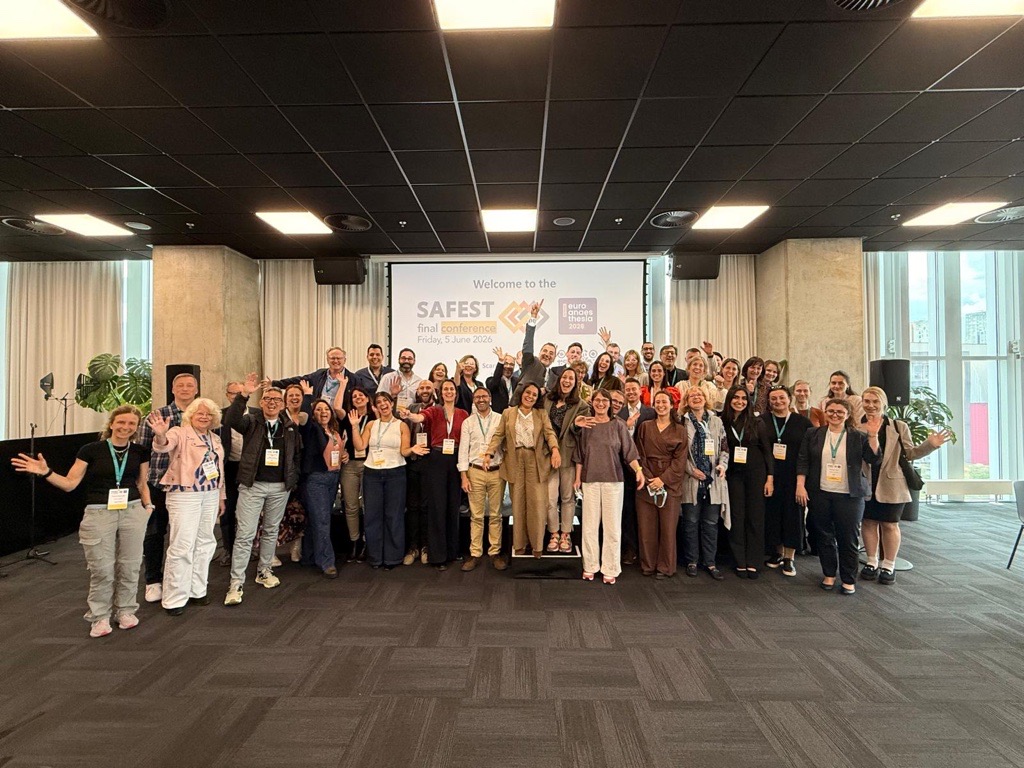
The lightning talk “The Peripartum Crisis” will take place at the Euroanaesthesia Congress 2026 on Saturday, June 6 at 10:30 – 11:30 CEST in room DELTA A.
References
- Pollock, W., Rose, L. & Dennis, CL. Pregnant and postpartum admissions to the intensive care unit: a systematic review. Intensive Care Med 36, 1465–1474 (2010). https://doi.org/10.1007/s00134-010-1951-0
- Jardine, Jen, et al. “Maternity admissions to intensive care in England, Wales and Scotland in 2015/16: A report from the National Maternity and Perinatal Audit.” (2019). https://maternityaudit.org.uk/FilesUploaded/NMPA%20Intensive%20Care%20sprint%20report.pdf
- Krawczyk P, Dabrowska D, Guasch E, Jörnvall H, Lucas N, Mercier FJ, Schyns-van den Berg A, Weiniger CF, Balcerzak Ł, Cantellow S; MaCriCare study group. Preparedness for severe maternal morbidity in European hospitals: The MaCriCare study. Anaesth Crit Care Pain Med. 2024 Jun;43(3):101355. doi: 10.1016/j.accpm.2024.101355. Epub 2024 Feb 13. PMID: 38360406. https://www.sciencedirect.com/science/article/pii/S2352556824000134?via%3Dihub
- Prior, C.H., Burlinson, C.E.G. and Chau, A. (2022), Emergencies in obstetric anaesthesia: a narrative review. Anaesthesia, 77: 1416-1429. https://doi.org/10.1111/anae.15839
- Strandqvist E, Olheden S, Bäckman A, Jörnvall H, Bäckström D. Physician-staffed prehospital units: a retrospective follow-up from an urban area in Scandinavia. Int J Emerg Med. 2023 Jul 14;16(1):43. doi: 10.1186/s12245-023-00519-8. PMID: 37452288; PMCID: PMC10349430. https://link.springer.com/article/10.1186/s12245-023-00519-8
- Bäckström D, Jörnvall H, Strandqvist E, Ahlerup R, Wahlin RR. Prevalence and severity of pediatric cases in Stockholm’s physician-staffed prehospital units: a retrospective cohort study. BMC Emerg Med. 2024 Nov 12;24(1):211. doi: 10.1186/s12873-024-01126-3. PMID: 39533177; PMCID: PMC11555878. https://link.springer.com/article/10.1186/s12873-024-01126-3
- Griffiths, S.K., Russell, R., Broom, M.A., Devroe, S., Van de Velde, M. and Lucas, D.N. (2024), Intrathecal catheter placement after inadvertent dural puncture in the obstetric population: management for labour and operative delivery. Guidelines from the Obstetric Anaesthetists’ Association. Anaesthesia, 79: 1348-1368. https://doi.org/10.1111/anae.16434
- Lucas, D.N. and Bamber, J.H. (2018), UK Confidential Enquiry into Maternal Deaths – still learning to save mothers’ lives. Anaesthesia, 73: 416-420. https://doi.org/10.1111/anae.14246
- Metodiev Y, Braveman F. Anaesthesia and neurological disorders in pregnancy. BJA Educ. 2021;21(6):210-217. doi:10.1016/j.bjae.2021.02.003 https://www.bjaed.org/article/S2058-5349(21)00018-4/fulltext
- Hosley, Catherine M. and Louise D. McCullough. “Acute Neurological Issues in Pregnancy and the Peripartum.” The Neurohospitalist 1 (2011): 104 – 116. https://journals.sagepub.com/doi/10.1177/1941875211399126
- Inozemtsev K, Yeh E, Nasr NF. Neurologic disease in the obstetric patient. Curr Opin Anaesthesiol. 2024 Oct 1;37(5):453-459. doi: 10.1097/ACO.0000000000001405. Epub 2024 Jul 11. PMID: 39011740. https://journals.lww.com/co-anesthesiology/abstract/2024/10000/neurologic_disease_in_the_obstetric_patient.4.aspx