





High-fidelity
Simulation Training
The ESAIC recognises the value and importance of this educational methodology and its value to safer patient care. It works to promote simulation training for residents and specialists throughout Europe.
The Østergaard Declaration
Simulation-based education and training (SBET) has moved beyond innovation or educational novelty; the evidence for its effectiveness in improving clinical competence, team performance, organisational learning, and patient safety is now well established. The central challenge is no longer whether simulation works, but why it remains inconsistently implemented, unevenly funded, and insufficiently embedded within healthcare and training systems. SBET must be recognised as core healthcare and educational infrastructure—planned, governed, resourced, and integrated across the full professional life cycle, with appropriate support for simulation faculty and systems-level implementation. Achieving this will require coordinated action from professional societies, regulators, educators, and healthcare institutions to move from evidence to sustained implementation. Simulation is now a professional, organisational, and ethical imperative.
Integration of simulation-based education in anaesthesiology specialist training
The Simulation Committee works to define guidance on how SBET can be integrated into residency training curricula across Europe.
Committee members recently took part in an Utstein meeting to establish the foundation for integrating SBET into the anaesthesiology training curriculum for residents. This work will allow countries that wish to implement this change to have guidelines and recommendations as to how to do this on a practical level.
SimLab
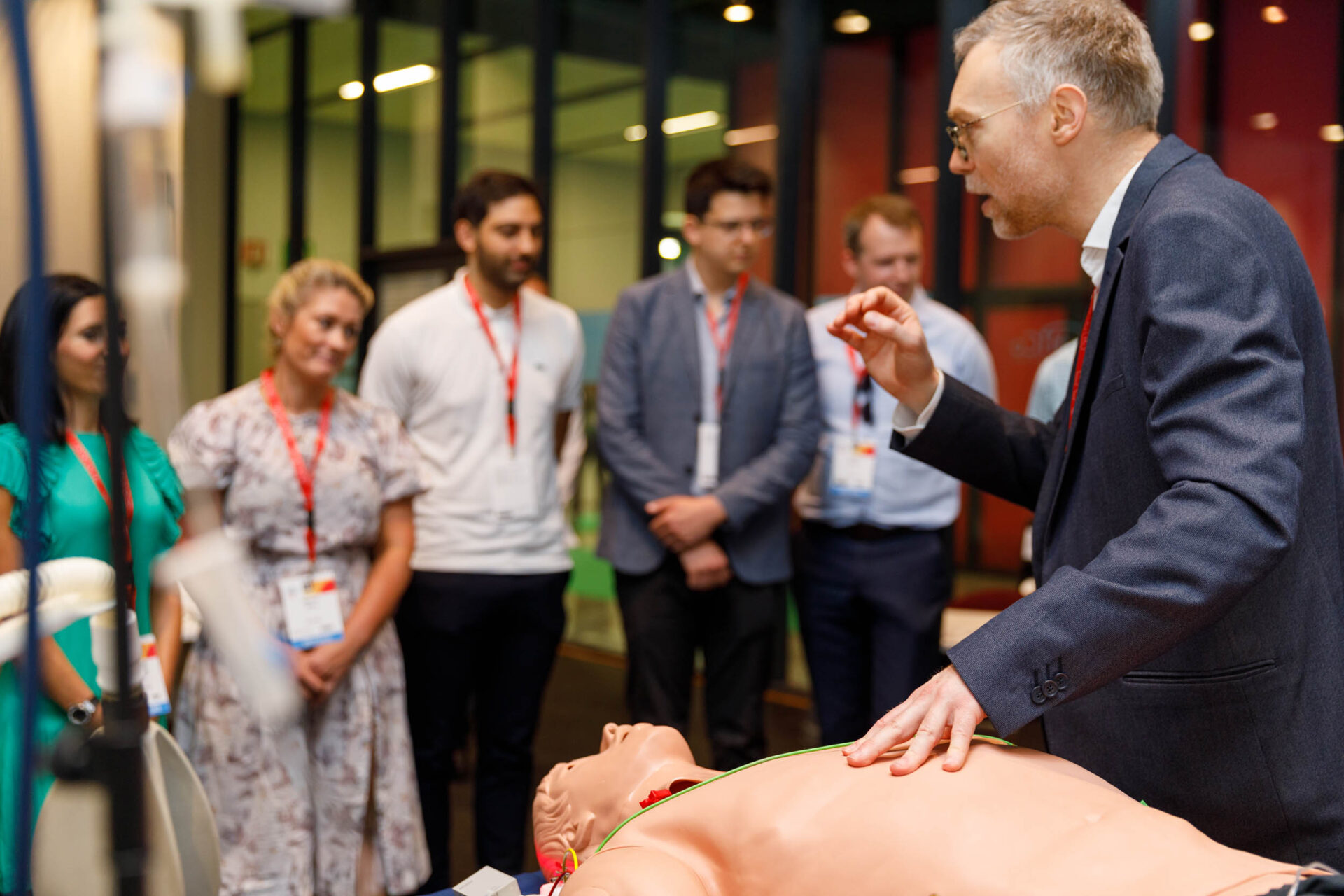
Members of the Simulation Committee support the SimLab that takes place every year at Euroanaesthesia. Here delegates have a chance to sign up to take part in simulation scenarios using high-fidelity mannequins and receive debriefing from experienced simulation faculty.
What is the status of Simulation Based Education Training (SBET) in Europe?
The European Society of Anaesthesiology and Intensive Care (ESAIC) instituted the ESAIC Simulation Committee to improve the use of SBET in anaesthesiology across Europe. The Simulation Committee decided to conduct a survey to establish an inventory of the current regulatory policies, recommendations, implementation and use of SBET in national anaesthesiology/ intensive care medicine residency training curricula in all countries that are members of the ESAIC. This is the first survey done of this kind and is of immense value for informing the strategy of the committee’s work.
References
- Gaba DM, Howard SK, Fish KJ, et al. Simulation-based training in Anesthesia Crisis Resource Management (ACRM): a decade of experience. Simul Gaming 2001; 32:175–193.
- De Hert, Stefan. European simulation-based education and training in anaesthesiology and intensive care: still a long way to go?. European Journal of Anaesthesiology: June 2022 – Volume 39 – Issue 6 – p 487-488
- Savoldelli GL, Østergaard D. Simulation-based education and training in anaesthesia during residency in Europe: where are we now? A survey conducted by the European Society of Anaesthesiolohy and Intensive Care Simulation Committee. Eur J Anaesthesiol 2022; 39:559–569.