








Newsletter
Postoperative monitoring on general wards: will continuous wireless wearable monitoring become routine care?
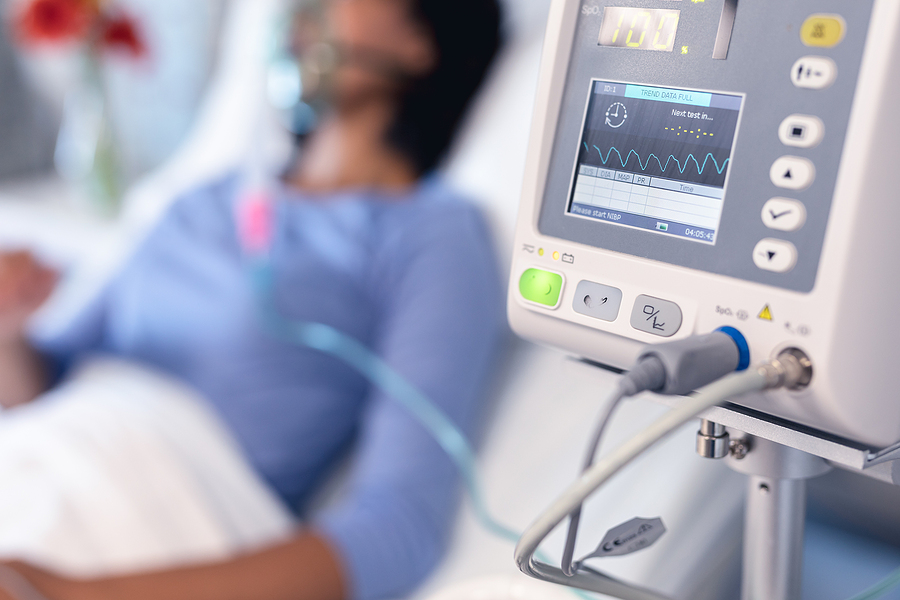
Postoperative monitoring is typically intermittent, with observation gaps of 4–6 hours depending on patient risk, potentially delaying recognition of deterioration and compromising rescue opportunities. (1) A substantial proportion of postoperative in-hospital deaths occur on general wards (2), and although postoperative complications affect approximately 13–20% of patients, mortality is often not solely because of the complication itself, but because of a failure to recognise and respond to deterioration in a timely manner. (3) Physiological deterioration often precedes adverse events by several hours, yet delayed patient assessment may prevent rapid recognition and intervention. Now new technology enables continuous wireless monitoring that is worn by the patient and enables immediate recognition of a deterioration in a patient’s condition, followed by an alarm to alert staff. Wearable solutions include skin patches, wrist-worn devices, or chest sensors. These devices can be tethered or wireless. This new technology shows promise, but can it deliver?
In the panel discussion “Postoperative monitoring on general wards: will continuous wireless wearable monitoring become routine care?” the speakers will explore whether there is evidence to show continuous monitoring is reliable in improving outcomes, how accurate continuous monitoring is and if clinicians use continuous monitoring, can they adequately respond to prevent failure to rescue and improve patient outcomes.
Prof. Dr. Bernd Saugel is the Executive Vice Chair of the Department of Anesthesiology in the Center of Anesthesiology and Intensive Care Medicine at the University Medical Center Hamburg-Eppendorf (Hamburg, Germany). In his presentation “Continuous ward monitoring: promises and obstacles,” he will share evidence from his large body of research on this topic. (4)(5)(6) He will present the case for continuous monitoring using postoperative mortality data and explore why existing intermittent monitoring is structurally inadequate. Outlining the theoretical promise of wearable technology, he will also be honest about the practical obstacles such as measurement validation challenges, connectivity and battery issues, costs, patient acceptability, nurse workflow integration, and the need for appropriate machine learning or AI-based alert strategies. Amongst his numerous publications, he co-authored “Continuous ward monitoring: the selection, monitoring, alarms, response, treatment (SMART) road map” which proposes a road map of open research questions that researchers can use to explore the feasibility and effectiveness of continuous ward monitoring. (7)
With the theoretical promise of wearable technologies in mind, it raises the question of how well they function in a real-life environment. Dr. Marjolein Haveman will explore this in her presentation “Technologies for ward monitoring: measurement methods and limitations”.
Dr. Haveman is a Technical Physician with expertise in signal analysis, wearable sensors, and telemonitoring. She obtained her PhD with her thesis entitled “Towards clinical application of perioperative telemonitoring” at the Department of Surgery of the University Medical Center Groningen (UMCG), in collaboration with the University of Twente. She currently works as a researcher at the Department of Anesthesiology and the UMCG Innovation Center, focusing on patient monitoring at the ward and at home, early warning algorithms for patient deterioration, and delivering the right care at the right place while supporting nursing staff. (8) Her research on wearable technologies for ward monitoring includes evaluating measurement accuracy across vital signs, activity levels, and clinical contexts. As project lead for hospital-wide implementation of continuous ward monitoring in an academic medical center, she will discuss key methods and limitations of wearable sensors, including parameter- and motion-dependent accuracy (9)(10)(11), the current status of supporting algorithms for data interpretation, and organisational barriers influencing reliable clinical use. (12)(13)
With increased pressure on general ward staff because of staff shortages, system-based pressures and rising patient acuity, introducing new technologies should ease the burden of care and not increase it. One very real risk of continuous wireless wearable monitoring is “Alarm Fatigue”. Dr. Carlos Ferrando Ortola will explore this subject in the final presentation of this session. Dr. Ortola is the head of the Surgical Intensive Care Unit, Anesthesiology and Critical Care Department at the Hospital Clínic of Barcelona in Spain. He is an anaesthesiologist and intensivist, extensively published on perioperative lung-protective ventilation strategies, ARDS management, and intraoperative optimisation (notably the iPROVE trial series). (14)(15)(16) Alarm fatigue represents alarm desensitisation caused by the high number of false alarms, poor system design, and the complexity of monitoring systems, including confusion about what has triggered an alarm. (17) Dr. Ortola will explore current issues and potential solutions. These include technically false or clinically irrelevant patient monitoring alarms in clinical settings, which create sensory overload and desensitisation among staff. (18) The very reasons that make this technology so valuable are also the source of its greatest implementation challenge, but hopeful solutions are emerging. Trend-based monitoring without threshold alarms, individualised alarm thresholds, AI-assisted filtering of non-actionable alerts, and structured nurse response protocols all show great promise as actionable solutions. (19)(20)(21)
The panel discussion “Postoperative monitoring on general wards: will continuous wireless wearable monitoring become routine care?” will take place at the Euroanaesthesia Congress on Sunday, June 7, at 14:00–15:00 CEST in room DELTA A.
References
- Michard F, Thiele RH, Saugel B, et al. Wireless wearables for postoperative surveillance on surgical wards: a survey of 1158 anaesthesiologists in Western Europe and the USA. BJA Open. 2022;1:100002. Published 2022 Feb 23. doi:10.1016/j.bjao.2022.100002 https://www.bjaopen.org/article/S2772-6096(22)00001-6/fulltext
- Syan J, Joshi M, Beard J, Attebery J, Ng F, Khan S. Wearable Continuous Vital Sign Monitoring Study (WARD-AMS) to Detect Clinical Deterioration in Postoperative General Surgery Patients: Protocol for a Randomized Controlled Trial. JMIR Res Protoc 2025;14:e81558. DOI: 10.2196/81558 https://www.researchprotocols.org/2025/1/e81558
- Rosero EB, Romito BT, Joshi GP. Failure to rescue: A quality indicator for postoperative care. Best Pract Res Clin Anaesthesiol. 2021 Dec;35(4):575-589. doi: 10.1016/j.bpa.2020.09.003. Epub 2020 Sep 25. PMID: 34801219. https://www.sciencedirect.com/science/article/abs/pii/S1521689620300938
- Khanna AK, Flick M, Saugel B. Continuous vital sign monitoring of patients recovering from surgery on general wards: a narrative review. Br J Anaesth. 2025 Feb;134(2):501-509. doi: 10.1016/j.bja.2024.10.045. Epub 2025 Jan 7. PMID: 39779421. https://www.bjanaesthesia.org/article/S0007-0912(24)00709-8/fulltext
- Khanna AK, Hoppe P, Saugel B. Automated continuous noninvasive ward monitoring: future directions and challenges. Crit Care. 2019 May 30;23(1):194. doi: 10.1186/s13054-019-2485-7. PMID: 31146792; PMCID: PMC6543687. https://link.springer.com/article/10.1186/s13054-019-2485-7
- Saugel B, Hoppe P, Khanna AK. Automated Continuous Noninvasive Ward Monitoring: Validation of Measurement Systems Is the Real Challenge. Anesthesiology. 2020 Mar;132(3):407-410. doi: 10.1097/ALN.0000000000003100. PMID: 31929331. https://journals.lww.com/anesthesiology/fulltext/2020/03000/automated_continuous_noninvasive_ward_monitoring_.7.aspx
- Flick M, Saugel B. Continuous ward monitoring: the selection, monitoring, alarms, response, treatment (SMART) road map. Br J Anaesth. 2021 Nov;127(5):675-677. doi: 10.1016/j.bja.2021.07.016. Epub 2021 Aug 26. PMID: 34454711. https://www.bjanaesthesia.org/article/S0007-0912(21)00488-8/fulltext
- van Melzen R, Haveman ME, Schuurmann RCL, van Amsterdam K, El Moumni M, Tabak M, Struys MMRF, de Vries J-PPM. Validity and Reliability of Wearable Sensors for Continuous Postoperative Vital Signs Monitoring in Patients Recovering from Trauma Surgery. Sensors. 2024; 24(19):6379. https://doi.org/10.3390/s24196379
- van Melzen R, Haveman ME, Schuurmann RCL, Struys MMRF, de Vries J-PPM. Implementing Wearable Sensors for Clinical Application at a Surgical Ward: Points to Consider before Starting. Sensors. 2023; 23(15):6736. https://doi.org/10.3390/s23156736
- Ferrando C, Soro M, Unzueta C, Suarez-Sipmann F, et al. Individualized PeRioperative Open-lung VEntilation (iPROVE) Network. Individualised perioperative open-lung approach versus standard protective ventilation in abdominal surgery (iPROVE): a randomised controlled trial. Lancet Respir Med. 2018 Mar;6(3):193-203. doi: 10.1016/S2213-2600(18)30024-9. Epub 2018 Jan 19. PMID: 29371130. https://www.thelancet.com/journals/lanres/article/PIIS2213-2600(18)30024-9/abstract
- Ferrando C, Aldecoa C, Unzueta C, et al. iPROVE-O2 Network. Effects of oxygen on post-surgical infections during an individualised perioperative open-lung ventilatory strategy: a randomised controlled trial. Br J Anaesth. 2020 Jan;124(1):110-120. doi: 10.1016/j.bja.2019.10.009. Epub 2019 Nov 22. PMID: 31767144. https://www.bjanaesthesia.org/article/S0007-0912(19)30776-7/fulltext
- Ferrando C, Aldecoa C, Unzueta C, et al. iPROVE-O2 Network. Effects of oxygen on post-surgical infections during an individualised perioperative open-lung ventilatory strategy: a randomised controlled trial. Br J Anaesth. 2020 Jan;124(1):110-120. doi: 10.1016/j.bja.2019.10.009. Epub 2019 Nov 22. PMID: 31767144. https://www.bjanaesthesia.org/article/S0007-0912(19)30776-7/fulltext
- Michels EAM, Gilbert S, Koval I, Wekenborg MK. Alarm fatigue in healthcare: a scoping review of definitions, influencing factors, and mitigation strategies. BMC Nurs. 2025;24(1):664. Published 2025 Jun 20. doi:10.1186/s12912-025-03369-2 https://link.springer.com/article/10.1186/s12912-025-03369-2
- Chromik J, Klopfenstein SAI, Pfitzner B, et al. Computational approaches to alleviate alarm fatigue in intensive care medicine: A systematic literature review. Front Digit Health. 2022;4:843747. Published 2022 Aug 16. doi:10.3389/fdgth.2022.843747 https://www.frontiersin.org/journals/digital-health/articles/10.3389/fdgth.2022.843747/full
- van Rossum MC, Vlaskamp LB, Posthuma LM, et al. Adaptive threshold-based alarm strategies for continuous vital signs monitoring. J Clin Monit Comput. 2022;36(2):407-417. doi:10.1007/s10877-021-00666-4 https://link.springer.com/article/10.1007/s10877-021-00666-4
- van Rossum M, Bekhuis R, Wang Y, Hegeman J, Folbert E, Vollenbroek-Hutten M, Kalkman C, Kouwenhoven E, Hermens H. Early Warning Scores to Support Continuous Wireless Vital Sign Monitoring for Complication Prediction in Patients on Surgical Wards: Retrospective Observational Study. JMIR Perioper Med 2023;6:e44483. URL: https://periop.jmir.org/2023/1/e44483. DOI: 10.2196/44483
- Pan JF, Dowding D, Wong D, Scott A, Zhao Q. The Usability of Continuous Monitoring Devices With Deterioration Alerting Systems in Noncritical Care Units: Scoping Review. Interact J Med Res. 2026;15:e75713. Published 2026 Feb 10. doi:10.2196/75713 https://www.i-jmr.org/2026/1/e75713