







Newsletter
Beyond the operating room: anaesthesiologists extending perioperative care to the home front
Historically, perioperative care emphasised intraoperative procedures, even though preoperative consultation and postoperative recovery remained important stages on the pathway. Increased ageing and comorbidity in populations, pressures on hospital capacity, advances in digital health, AI, and remote monitoring are all acting to drive a fundamental transition from anaesthesiology being an intraoperative specialty to a perioperative systems discipline which increasingly recognises how each section of the pathway affects the overall outcome for the patient. Anaesthesiologists are becoming key coordinators during preoperative optimisation (prehabilitation), intraoperative precision care, and postoperative recovery, including continued care at home. (1)(2)(3)
The symposium session “Beyond the operating room: anaesthesiologists extending perioperative care to the home front” will explore the current and emerging roles of machine learning in summarising medical documentation and its impact on clinical efficiency and decision-making. Speakers will evaluate the use of technology in home-based prehabilitation and home ICU care, including its benefits and challenges, and discuss innovative tools for post-discharge follow-up that support improved patient outcomes and continuity of care.
Dr. Regina Pikman-Gavriely, an anaesthesiologist from Tel Aviv Medical Centre, Israel, will explore “The future (and present) of machine learning in summarizing medical documentation,” drawing on her work in AI applications in perioperative medicine, clinical decision support, and data-driven risk prediction. Early AI systems relied on rigid rule-based approaches and struggled to interpret clinical language accurately, but recent advances now allow models to process complex clinical text and convert it into actionable data. (4) Examples include automated discharge summaries, preoperative assessments, and ICU handovers. These tools can standardise documentation, support decision-making, and reduce administrative burden, helping to ease clinician workload and reduce the chances of burnout. (5) However, there remain many reasons for caution. AI systems can produce inaccurate outputs or omit key clinical details, which could affect patient safety. (6)(7) There are also concerns around bias, with the potential for unequal representation of populations leading to potentially harmful inaccuracies in documentation. (8) Together, these limitations highlight the need for careful oversight and ongoing evaluation before such technologies can be fully trusted in clinical practice.
Perioperative optimisation is expanding the range of patient-centred care in both the preoperative and postoperative sections of the pathway. This includes prehabilitation, where patients “train” for surgery with tailored physical, nutritional, and psychological adaptations to their lifestyle, which can support improvements in post-surgical outcomes. (9) Dr. Eva Rivas Ferreira will present “Applications for Home Prehabilitation”. Dr. Rivas Ferreira is part of the Hospital Clínic Barcelona prehabilitation group, which develops structured, multimodal prehabilitation pathways and integrates exercise physiology, respiratory optimisation, and cognitive assessment. This empowers patients to participate in their treatment, potentially leading to better outcomes. She will share what works and what doesn’t when implementing home-based prehabilitation programmes, presenting data from their Surgifit / Barcelona model and how they increase adherence to the programme and maximise patient engagement. She will also share which digital platforms have proved to be a success.
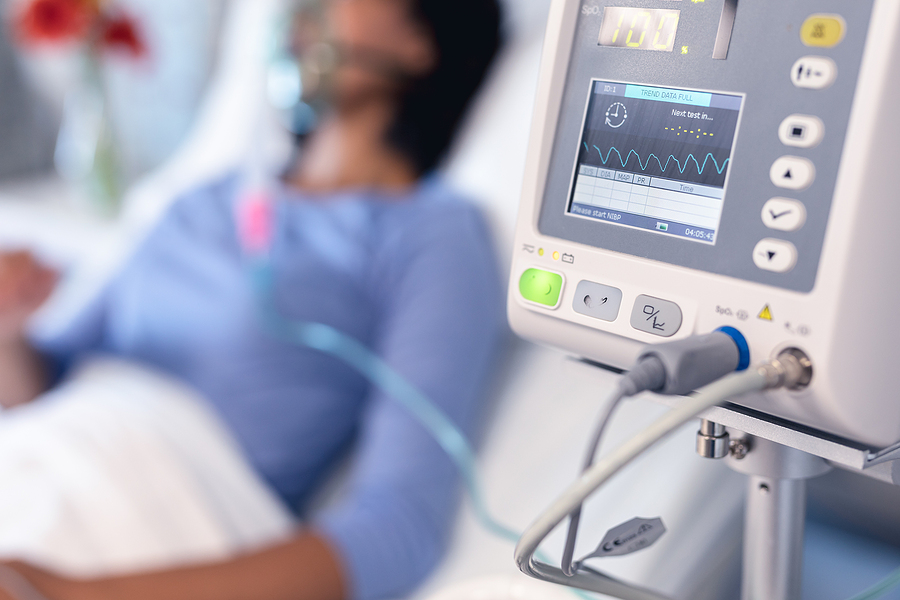
Postoperative care is progressing thanks to wearable technologies and digital solutions that support patient recovery beyond the hospital walls. Devices that continuously track vital signs and activity give healthcare providers reliable, real-time insights, while mobile apps let patients report pain and symptoms directly from home. (12) Together, these innovations are making “virtual wards” possible. Caregivers can monitor patients remotely, respond quickly to any issues, and tailor care to individual needs. This approach allows patients to recuperate comfortably at home and helps clinicians deliver attentive, effective support. As these virtual wards develop, it could allow patients to be discharged earlier, freeing up vital bedspace. (13)(14) However, because of a shortage in healthcare personnel and increasing costs, and a trending decline in invasive procedures, hospitals may try to find reasons to discharge patients sooner. This may have negative consequences for the patients.
Dr. Lonneke Staals will present a detailed look at some of these technologies in “Technologies for post-discharge follow-up and care.” She will evaluate whether digital health interventions (DHIs), such as mobile apps, smartphone-based tools, tablets, or other remote monitoring technologies, safely and effectively support patients at home. She will reference a recent study that assessed effects on patient safety, patient experience, and efficiency. (15)
Dr. Staals will explore whether digital home-monitoring tools show promising benefits for reducing certain symptoms, cutting costs, and enhancing recovery experience and quality of life, with no apparent increase in safety risks. Although this study offered promising results, it raised other questions. Do these technologies merit caution until further trials can take place? Should we regard them as a helpful supplement to, rather than a complete replacement for, traditional post-discharge care?
The symposium session Beyond the operating room: anaesthesiologists extending perioperative care to the home front will take place at the Euroanaesthesia Congress 2026 on Monday, June 8 at 13:30–14:30 CEST in room Rotterdam B.
References
- Schonborn JL, Anderson H. Perioperative medicine: a changing model of care. BJA Educ. 2019;19(1):27-33. doi:10.1016/j.bjae.2018.09.007 https://www.bjaed.org/article/S2058-5349(18)30118-5/fulltext
- Haggerty J L, Reid R J, Freeman G K, Starfield B H, Adair C E, McKendry R et al. Continuity of care: a multidisciplinary review BMJ 2003; 327 :1219 doi:10.1136/bmj.327.7425.1219 https://www.bmj.com/content/327/7425/1219.full
- Hossain E, Rana R, Higgins N, Soar J, Barua PD, Pisani AR, Turner K. Natural Language Processing in Electronic Health Records in relation to healthcare decision-making: A systematic review. Comput Biol Med. 2023 Mar;155:106649. doi: 10.1016/j.compbiomed.2023.106649. Epub 2023 Feb 10. PMID: 36805219. https://www.sciencedirect.com/science/article/abs/pii/S0010482523001142?via%3Dihub
- Bracken, A., Reilly, C., Feeley, A. et al. Artificial Intelligence (AI) – Powered Documentation Systems in Healthcare: A Systematic Review. J Med Syst 49, 28 (2025). https://doi.org/10.1007/s10916-025-02157-4 https://link.springer.com/article/10.1007/s10916-025-02157-4
- Asgari, E., Montaña-Brown, N., Dubois, M. et al. A framework to assess clinical safety and hallucination rates of LLMs for medical text summarisation. npj Digit. Med. 8, 274 (2025). https://doi.org/10.1038/s41746-025-01670-7 https://www.nature.com/articles/s41746-025-01670-7
- Sun Z, Yim WW, Uzuner Ö, Xia F, Yetisgen M. A scoping review of natural language processing in addressing medically inaccurate information: Errors, misinformation, and hallucination. J Biomed Inform. 2025 Sep;169:104866. doi: 10.1016/j.jbi.2025.104866. Epub 2025 Jul 22. PMID: 40706945; PMCID: PMC12356652.https://pubmed.ncbi.nlm.nih.gov/40706945/ https://www.sciencedirect.com/science/article/abs/pii/S1532046425000954?via%3Dihub
- Bear Don’t Walk OJ 4th, Reyes Nieva H, Lee SS, Elhadad N. A scoping review of ethics considerations in clinical natural language processing. JAMIA Open. 2022;5(2):ooac039. Published 2022 May 26. doi:10.1093/jamiaopen/ooac039 https://academic.oup.com/jamiaopen/article/5/2/ooac039/6593700
- Díaz-Vidal P, Gil-Casado C, Fernández-Vázquez U, Diz-Ferreira E, Luna-Rojas P, Diz JC. Effect of preoperative prehabilitation on the 6-minute walk distance and postoperative outcomes in adult patients: meta-analysis. BJS Open. 2025 Dec 29;10(1):zraf162. doi: 10.1093/bjsopen/zraf162. PMID: 41665614; PMCID: PMC12888387. https://academic.oup.com/bjsopen/article/10/1/zraf162/8471330?
- Knight, S.R., Ng, N., Tsanas, A. et al. Mobile devices and wearable technology for measuring patient outcomes after surgery: a systematic review. npj Digit. Med. 4, 157 (2021). https://doi.org/10.1038/s41746-021-00525-1 https://www.nature.com/articles/s41746-021-00525-1
- Norman G, Bennett P, Vardy ERLC. Virtual wards: a rapid evidence synthesis and implications for the care of older people. Age Ageing. 2023;52(1):afac319. doi:10.1093/ageing/afac319 https://academic.oup.com/ageing/article/52/1/afac319/6974849
- Bentsen, Signe Berit; Stjernberg, Mi; Ræder, Johan; Eide, Geir Egil; Tvedt, Marianne Nesbjørg; Hegland, Pål Andre. Post discharge digital health technology interventions in ambulatory surgery: A systematic review and meta-analysis. European Journal of Anaesthesiology 42(11):p 974-986, November 2025. | DOI: 10.1097/EJA.0000000000002233 https://journals.lww.com/ejanaesthesiology/abstract/2025/11000/post_discharge_digital_health_technology.4.aspx