





Newsletter
Society of Anaesthesia and Intensive Care Medicine in North Macedonia: How We Started And Where We Going

The Macedonian anaesthesia community was part of the Yugoslav Society for Anaesthesiology, Reanimatology, and Intensive treatment (JUARIL), which operated at the federal level, with each republic hosting its own section of anaesthesiologists.
Within the framework of the Yugoslav Society of Anaesthesiologists, several anaesthesiologists from Macedonia were educated in Belgrade in 1946 by Dr Russell Davies and Dr Patrick Shackleton, who are considered the fathers of modern anaesthesia in Yugoslavia.
Assoc. Prof. Dr Risto Ivanovski was the first doctor educated by them.

In 1961, the first certificate in anaesthesiology specialisation was issued to Prof. Dr Vladimir Andonov, and in 1962, the Section for Anaesthesiology was established within the framework of the Macedonian Doctors’ Association and YUARIL, with the first President being Associate Professor Dr Risto Ivanovski. The Macedonian section of anesthesiologists was part of YUARIL till 1991, when the dissolution of Yugoslavia and JUARIL became apparent.
The Transition and Formation
In 1991, Macedonia formally declared its independence. In this vein, the Section of Anesthesiologists of Macedonia underwent a significant transformation, emerging as the Society of Physicians for Anesthesia, Resuscitation, and Intensive Care. This decision was formalised on June 19, 1993. The first President of the Society was Prof. Dr Ordan Nojkov, and in 1996, the first Congress of the Macedonian Society of Anaesthesiology was organised.
International Affiliation
In the ensuing years, our Society embarked on a concerted effort to gain admission to several esteemed international organisations, including the World Federation of Societies of Anesthesiologists (WFSA), the World Federation of Societies of Intensive and Critical Care Medicine (WFSICCM), the European Society of Anaesthesiology (ESA), the European Academy of Anaesthesiology (EA), and the European Society of Regional Anaesthesia (ESRA).
Professional Development and Engagement
The benefits of admission to the aforementioned anaesthesia organisations were manifold. During this period, we were regularly invited to attend meetings of the presidents of European anesthesiology societies, typically held in conjunction with the annual gatherings of the German Society of Anesthesiology (AGAI), where our members actively participated.
In the years ahead and today, our Society plays a pivotal role in fostering the professional growth of our members.
For the first time in April 2017, the Macedonian Journal of Anaesthesia (MJA) was published under the leadership of Prof. Dr Mirjana Shosholceva, Editor-in-Chief.
MJA is a scientific journal of the Macedonian Society of Anaesthesia (MSA) and the Macedonian Society of Critical Care Medicine (MSCCM). In 2018, MJA received a grant from the European Society of Anaesthesiology, which laid a solid foundation for establishing the journal as the most respected in North Macedonia. The Journal is published four times a year (April, June, October, and December), but additional supplements might be published when needed.
Priorities and future developments of MSA
Our Society’s goals are to advance and improve patient care and safety in the field and disciplines allied to anaesthesia, to promote and support education and research, to protect and support the interests of its members, and to encourage collaboration at the national and international levels.
The activities are very diverse, including the organisation of a multitude of meetings, symposia, and seminars, as well as numerous workshops, reflecting our commitment to continuous learning and development.
While many meetings are tailored for our members, we also facilitate joint sessions with other medical specialties, fostering interdisciplinary collaboration on crucial topics.
Besides professional matters, members shared personal milestones, such as completing specialisations, earning master’s or doctoral degrees, or retiring from their careers.
Overall, these events were not just about professional development; they also played a crucial role in fostering unity and solidarity among anesthesiologists in Macedonia.
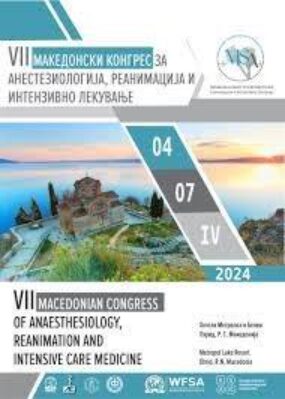
The last Congress of MSA was in 2024 in the beautiful Ohrid, where many domestic and international anaesthesiologists gathered.
Macedonian anaesthesiologists in the Crisis Response to the tragic event in North Macedonia
Sparklers shooting foot-long flames. A ceiling covered in flammable foam. A crowded basement with a narrow staircase exit that became a choke point. And it was so unbelievable that it happened again. After the devastating fire in Crans-Montana in Switzerland, one thing is clear: the tragedy was avoidable. Emotions are running high, amid incomprehension and anger over lost lives.
Ten months ago, on March 16, a similar tragic event in North Macedonia occurred. The death toll was 63 victims, 20 of whom were minors, and more than 200 were injured.

The event took place in the small town of Kocani, in a nightclub with an ongoing concert. Inside, there were three times as many people as legally allowed, with only one exit; the other was locked. The ceiling materials were highly flammable. Sparks from pyrotechnic devices started the fire. The fact that there was only a single entry and exit point in the improvised nightclub caused panic.
Many were caught in a crush at the club as people rushed for exits. During the chaos, most of the victims were found on the ground, trampled near the exit before managing to get out.
The fire itself was extinguished relatively quickly. From that moment, rescue efforts started rapidly. In the early morning hours, a crisis management team was established, led by the Ministry of Health. The team included doctors from different fields, such as anaesthesiologists and plastic surgeons, as well as people from other services in the Ministry of Transport, the Ministry of Foreign Affairs, the Ministry of Internal Affairs, and the Red Cross. Macedonian anaesthesiologists were on the frontline in caring for and providing proper treatment for acutely injured patients.
In the next three days, almost 110 people were taken abroad, thankfully, with international medical assistance, and 95 people were hospitalised in our country. In response to the disaster, Macedonia sent an official request, and the European Union activated its Civil Protection Mechanism and coordinated air evacuation.
As a result of this prompt reaction, only 3 people from 212 injured had the worst outcome: 2 persons died in Lithuania, and 1 person, very severely injured, died in our hospital, eight months after.
What we learned
We learned that several factors are fundamental for the successful management of a tragic health crisis.

First factor: we had an operational National Health Security Action Plan that helped us navigate and manage challenging situations effectively.
After COVID, we realised how important it is to have an agreed plan and collaboration at all levels, which are critical for preparedness and prompt response to health emergencies.
We see that we need to immediately and continuously develop, strengthen, and sustain our capacities.
Our country has completed several processes (published as assessment reports) as part of the WHO instructions.
1. A Joint External Evaluation (JEE) is a collaborative, multisector process to assess country capacities to prevent, detect and rapidly respond to public health risks.
2. State Party Self-Assessment Annual Reporting (SPAR) 2022, The SPAR tool consists of 35 indicators for the 15 IHR capacities needed to detect, assess, notify, report and respond to public health risks.
3. The Strategic Toolkit for Assessing Risks (STAR) offers a comprehensive toolkit and approach to enable governments to rapidly conduct a strategic assessment of public health risks. This methodology was used in North Macedonia to conduct an all-hazards public health risk assessment, which served as a basis for the development of the country’s National Action Plan for Health Security (NAPHS).
North Macedonia has become the first country in the Western Balkans to officially adopt a national action plan for health security (NAPHS).
4. Vulnerability of its population and infrastructure and risk analysis.
The second factor was the establishment of a dedicated crisis management team with defined roles and responsibilities.
The third factor is fast and proper risk assessment of our human resources, infrastructure and technical resources to deal with such a large number of heavily injured and burned people.
The team had excellent, timely coordination and transparent communication, and, most importantly, heroic health workers at all levels and their dedicated work.
All these factors made a significant difference in the successful management of the situation, given our limited resources.
The key is to be prepared to respond effectively, ensuring the best possible outcome.
This tragedy had a significant impact on society. It is not the same as it used to be. The people are still grieving. Many patients still need rehabilitation in many aspects. It includes physical, medical and psychological rehabilitation for the injured and their families. The approach is multidisciplinary, and this is a long-term battle that will not end soon.
Author:
- Vesna Durnev, Specialist in anaesthesiology and intensive medicine. Clinic of Trauma, Orthopaedics, Anaesthesiology, Resuscitation with Intensive Care and Emergency Centre, Medical Faculty Skopje, University “Ss Cyril and Methodius”.
- Ordan Nojkov, Medical Faculty Skopje, University “Ss Cyril and Methodius”.