

Login to myESAIC Membership
Back

About

The ESAIC is dedicated to supporting professionals in anaesthesiology and intensive care by serving as the hub for development and dissemination of valuable educational, scientific, research, and networking resources.


Back

Congresses

The ESAIC hosts the Euroanaesthesia and Focus Meeting congresses that serve as platforms for cutting-edge science and innovation in the field. These events bring together experts, foster networking, and facilitate knowledge exchange in anaesthesiology, intensive care, pain management, and perioperative medicine. Euroanaesthesia is one of the world’s largest and most influential scientific congresses for anaesthesia professionals. Held annually throughout Europe, our congress is a contemporary event geared towards education, knowledge exchange and innovation in anaesthesia, intensive care, pain and perioperative medicine, as well as a platform for immense international visibility for scientific research.


Back

Professional Growth

The ESAIC's mission is to foster and provide exceptional training and educational opportunities. The ESAIC ensures the provision of robust and standardised examination and certification systems to support the professional development of anaesthesiologists and to ensure outstanding future doctors in the field of anaesthesiology and intensive care.


Back

Research

The ESAIC aims to advance patient outcomes and contribute to the progress of anaesthesiology and intensive care evidence-based practice through research. The ESAIC Clinical Trial Network (CTN), the Research Groups and Grants all contribute to the knowledge and clinical advances in the peri-operative setting.


Learn more about what activities are currently ongoing in Research.

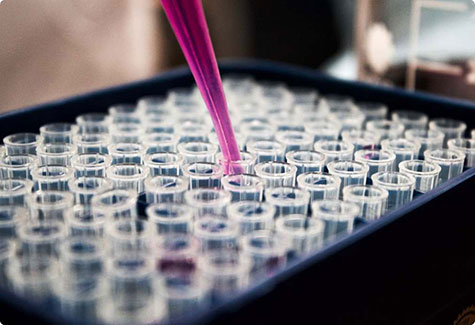
pink fluid being poured into many test tubes
Back

EU Projects

The ESAIC is actively involved as a consortium member in numerous EU funded projects. Together with healthcare leaders and practitioners, the ESAIC's involvement as an EU project partner is another way that it is improving patient outcomes and ensuring the best care for every patient.


image of a stethoscope laying on the european flag
Back

Sustainability

The ESAIC is committed to implementing the Glasgow Declaration and drive initiatives towards greater environmental sustainability across anaesthesiology and intensive care in Europe.


Back

Partnerships

The ESAIC works in collaboration with industry, national societies, and specialist societies to promote advancements in anaesthesia and intensive care. The Industry Partnership offers visibility and engagement opportunities for industry participants with ESAIC members, facilitating understanding of specific needs in anaesthesiology and in intensive care. This partnership provides resources for education and avenues for collaborative projects enhancing science, education, and patient safety. The Specialist Societies contribute to high-quality educational opportunities for European anaesthesiologists and intensivists, fostering discussion and sharing, while the National Societies, through NASC, maintain standards, promote events and courses, and facilitate connections. All partnerships collectively drive dialogue, learning, and growth in the anaesthesiology and intensive care sector.


Back

Guidelines

Guidelines play a crucial role in delivering evidence-based recommendations to healthcare professionals. Within the fields of anaesthesia and intensive care, guidelines are instrumental in standardizing clinical practices and enhancing patient outcomes. For many years, the ESAIC has served as a pivotal platform for facilitating continuous advancements, improving care standards and harmonising clinical management practices across Europe.


Back

Publications

With over 40 years of publication history, the EJA (European Journal of Anaesthesiology) has established itself as a highly respected and influential journal in its field. It covers a wide range of topics related to anaesthesiology and intensive care medicine, including perioperative medicine, pain management, critical care, resuscitation, and patient safety.


Back

Membership

Becoming a member of ESAIC implies becoming a part of a vibrant community of nearly 8,000 professionals who exchange best practices and stay updated on the latest developments in anaesthesiology, intensive care and perioperative medicine. ESAIC membership equips you with the tools and resources necessary to enhance your daily professional routine, nurture your career growth, and play an active role in advancing anaesthesiology, intensive care and perioperative medicine.


Membership opportunities
at the ESAIC

woman showing another woman something on her computer in a hospital
Important Notice

Disclaimer

The ESAIC Examinations Committee is aware of certain initiatives claiming to be related to the EDAIC that are neither organised nor authorised by the ESAIC. We strongly recommend that you invest your time in the official ESAIC initiatives listed on the ESAIC website. ESAIC accepts no responsibility for the quality of any non-ESAIC courses.

Newsletter 2025

The Search for a Unifying Theory of Anaesthesia

Claude Bernard’s Great Experiment  

Anaesthesia as we know it today evolved from a series of early experiments and breakthroughs. The discovery of ether and chloroform in the 1840s revolutionised surgery, yet their mechanisms of action remained a mystery. Physicians and scientists were uncertain whether anaesthesia affected the brain, the nervous system, or another part of the body entirely. 

In the mid-19th century, Claude Bernard, a pioneer of experimental medicine, conducted a series of intriguing experiments to understand anaesthesia. Among his observations was the effect of ether on the Mimosa pudica plant, whose characteristic movement ceased when exposed to the agent. Bernard’s experiments contributed to early theories on anaesthesia, shaping discussions on its fundamental mechanisms and broader implications for physiology. 

Bernard, a physiologist ahead of his time, was obsessed with one fundamental question: What is the essence of life? His answer lay in a peculiar concept—protoplasm, a colloidal substance he believed was the universal fabric of all living beings. Bernard proposed that anaesthesia worked by abolishing protoplasm’s ability to respond to stimuli, effectively suspending the excitability of living tissue. For Bernard, volatile anaesthetics distinguished living organisms from ‘dead’ organised matter. According to him: ‘What is alive must sense and can be anaesthetised, the rest is dead.1 In effect, anaesthesia affects the ability of cells to react in response to a stimulus. In other words, anaesthesia was not just a physiological trick but an existential phenomenon, a temporary suspension of life’s essence. 

Fast-forward to 1901, when the Meyer-Overton rule was introduced. The rule proposed that an anaesthetic’s potency was directly related to its lipid solubility, meaning that the more an agent dissolved into fatty tissues, the more effectively it induced unconsciousness. Decades later, in the 1960s, Edmond “Ted” Eger II refined this understanding by introducing the concept of Minimum Alveolar Concentration (MAC)2—a practical and standardised way of measuring anaesthetic potency. While Bernard might not have known about lipid bilayers and receptor interactions, his vision of a unifying principle wasn’t far off. He saw anaesthesia as a universal effect, impacting a shared biological property across all forms of life

The Case of the Sleeping Plant 

One of Bernard’s most intriguing experiments involved the sensitive Mimosa pudica, a plant famous for its rapid leaf movements in response to touch. To Bernard’s amazement, when exposed to ether, the plant’s movements ceased—an effect he interpreted as proof that anaesthesia suppressed responsiveness at a fundamental level. If a plant, with no nervous system, exhibited a similar reaction to anaesthetised animals, Bernard reasoned that the effect must act on a universal physiological property. Though modern scientists debate the exact implications of this experiment, Bernard saw it as proof that anaesthesia wasn’t just about neurons and synapses—it affected life at its most basic level. 

Bernard’s theories dominated discussions on anaesthesia for years, laying the groundwork for future research into excitability and responsiveness in living tissue. Of course, modern science has since replaced the protoplasmic theory with a more sophisticated understanding of how anaesthetic agents interact with molecular and neural structures. We now know that anaesthesia isn’t just about “opacifying” protoplasm but about modulating ion channels, receptors, and synaptic transmissions in the central nervous system. 

Yet, in many ways, Bernard’s vision of a unifying principle still holds water. His curiosity laid the foundation for generations of anaesthesia research. Perhaps if Bernard were alive today, he’d be fascinated by the way MAC, receptor binding sites, and lipid solubility continue to shape our understanding of this mysterious and essential medical marvel. 

So, the next time you induce anaesthesia, take a moment to appreciate the long and fascinating history behind it. And maybe, just maybe, spare a thought for that little Mimosa pudica plant, slumbering peacefully in Claude Bernard’s laboratory. 

References

  1. https://pmc.ncbi.nlm.nih.gov/articles/PMC4091246/
  2. The Meyer–Overton hypothesis – Physics, Pharmacology and Physiology for Anaesthetists

Authors

  • Arta Leci
  • Chinemerem Onuorah
  • Marie-Hélène Lattes