






Newsletter
A Year as NASC Chair: Building Capacity, Collaboration and Leadership Across Europe
January 2026 marks one year since I stepped into the role of Chair of the National Anaesthesiologists Societies Committee (NASC), and it has been a privilege to reflect on the progress already achieved in collaboration with leaders from across Europe. It has also been a year that has deepened my admiration for the breadth, diversity and ambition of national societies and their ability to innovate, influence and inspire change across healthcare systems.
My experience this year has reaffirmed that European anaesthesiology is not a single entity, but a tapestry woven from multiple threads, different models of care, training pathways, resources and histories. Yet when national societies share challenges, learn from each other’s solutions and align behind common goals, we create a collective strength that none of us could generate alone. NASC’s mission has always been to strengthen these bridges, amplify national voices, and ensure that ESAIC strategy remains rooted in the realities of clinicians in every member country. This past year, that role has grown dramatically in both scope and visibility.
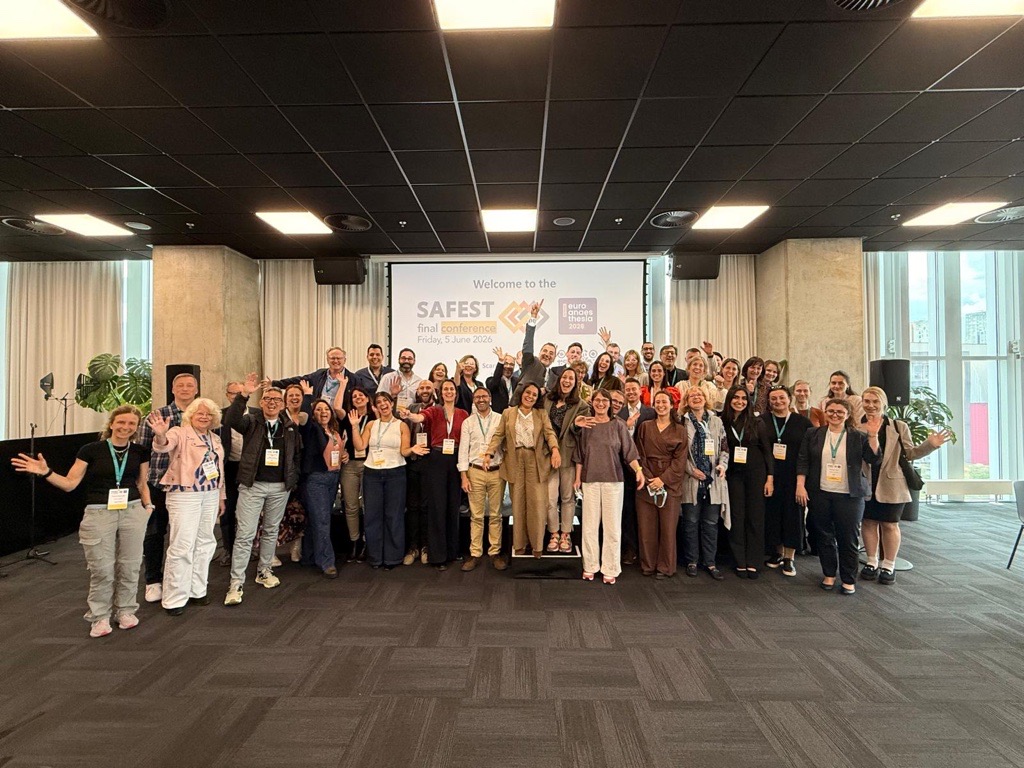
Although we held only one face-to-face NASC meeting in Lisbon during Euroanaesthesia 2025, its impact has been enhanced through structured online collaboration, committee representation, and increased visibility within ESAIC programmes. The Lisbon gathering brought together 31 delegates from national societies for a dedicated half-day of discussion and alignment. It served not only as an opportunity to share experiences but as the moment when shared priorities were defined and future direction set. The tone was forward-looking and practical, shaping how working groups would evolve and where NASC could facilitate meaningful progress.
The National Societies Village at Euroanaesthesia continues to grow into a vital platform for showcasing innovation, with 24 societies exhibiting their initiatives at Euroanaesthesia 2025, our highest participation yet. Walking through the Village, it was clear that the challenges we face may be shared, yet solutions are often country-specific, and collectively transformative.
Another highlight was NASC’s contribution to the revised Helsinki Declaration on Patient Safety 2.0. NASC played an active role in shaping the final document, ensuring that the commitments reflected the clinical reality of countries both large and small. In Lisbon, 26 national societies signed the Declaration, reinforcing that patient safety is a shared responsibility that transcends geography, funding models or staffing profiles.
This year also saw the launch of NASC’s Knowledge Exchange Webinar Series, a platform designed to maintain contact, conversation and learning between annual Euroanaesthesia congresses. The UK shared its experience developing and implementing the Crisis Quick Reference Handbook; Israel presented its innovative national simulation strategy; and North Macedonia shared its extraordinary insight into managing a nightclub fire and mass casualty event with exemplary coordination. These sessions reaffirm the principle that every country has something valuable to share, regardless of its size, location, or resources.
A milestone in 2025 was the establishment of four NASC Working Groups, each aligned with its respective ESAIC committee and led by NASC representatives. These groups reflect strategic priorities across Europe, Education & Examinations, Workforce & Wellbeing, Sustainability, and Simulation, and, together, they demonstrate a transition from dialogue to coordinated action. A particularly important development has been the creation of Simulation and Sustainability Ambassador networks, ensuring that every country now has a designated contact person to link national initiatives to ESAIC committees. What previously relied on informal connections is being replaced by structured visibility, accountability, and two-way engagement.
Across all four areas, NASC now feeds directly into ESAIC’s commitment to strengthen capacity, harmonise education, improve working environments, and accelerate innovation. Increasingly, NASC functions as ESAIC’s operational interface with national realities — transforming policy into implementation and translating local learning into shared European knowledge. Several societies have already benefited from these channels. Presentations to NASC from ESAIC committees — including Simulation, Patient Safety, the Exchange Programme Committee and the Examinations Committee — have facilitated dialogue and collaboration. These exchanges have already resulted in the delivery of ESAIC Advanced Patient Safety Courses in Malta, the expansion of simulation activities in several countries, and increased engagement in training pathways aligned with the European Training Requirements (ETR).
Collaboration this year also bore scientific fruit, most notably through the publication of the THIRST study in the European Journal of Anaesthesiology, a true NASC-driven project demonstrating the power of multi-country research networks. The study is significant not only for its findings but as a model for future collaboration: relevant clinical questions, rapid mobilisation of expertise, and a shared commitment to addressing issues that affect us all.
One of the clearest themes emerging across Europe is the rapid growth of simulation-based education. Simulation is increasingly recognised as a core component of safe, modern training, a shift accelerated by technological advancement, workforce pressures and the need to prepare trainees for rare but high-stakes situations. While access varies, the European trajectory is unmistakable. Malta has long embedded simulation in postgraduate training, complementing our early adoption of mandatory EDAIC Part 1 and Part 2 examinations. Israel has gone further by making simulation mandatory and investing heavily in train-the-trainer faculty development. Romania and the Czech Republic have significantly scaled simulation within their residency pathways, and the United Kingdom continues to integrate simulation with cognitive aids, such as the Crisis Quick Reference Handbook.
Early studies suggest that while simulation activities are widespread, formal integration into national curricula remains uneven, with northern and western European nations generally reporting earlier adoption. To map this landscape more accurately, the NASC Simulation Working Group has launched a Europe-wide survey tracking simulation use during residency, simulation centre access, faculty development structures and national expectations. Findings will be presented in 2026 and will guide future alignment.
In my home country, Malta, where I serve as national society president, 2025 was a year of substantial progress and celebration. We formalised our transition into the Association of Anaesthesiologists and Intensivists of Malta (AAIM), held our first national anaesthesia and intensive care conference, hosted two ESAIC Advanced Patient Safety Courses and completed a major update to the national training curriculum to embed simulation, competency-based learning and closer alignment with European Training Requirements. As a small nation, we often work with limited resources, but we move quickly, collaborate readily and contribute meaningfully to the European community. It was a source of national pride for Malta to be entrusted with hosting ESAIC CONNECT in 2027 — following the CONNECT meeting in Tirana later this year — marking our growing participation in ESAIC at an international level.
Looking ahead, NASC will continue building momentum across all areas. We will expand the webinar platform, strengthen our ambassador networks, support national engagement at Euroanaesthesia 2026, and continue bridging the gap between national needs and ESAIC’s strategic direction. This newsletter also features articles from our working group leads and national representatives, including contributions from Dr Petr Stourac on simulation mapping, Dr Jane Muret on sustainability networks, Dr Barak Cohen on Israel’s national approach to simulation faculty development, Dr Vesna Durnev on the North Macedonian society’s resilience and crisis response, as well as contributions from Dr Tim Meek on crisis cognitive aids, Professor Carla Nau on workforce challenges and Professor Armen Varosyan on Education and Examinations.
As I reflect on the past year, one message stands above the rest: when national societies come together, our collective capacity multiplies. The community we are building through NASC listens, shares, collaborates and advances. With NASC acting as Europe’s listening post, and ESAIC as the platform for shared action, we are shaping for a specialty that is more aligned, more resilient and better prepared for the future.
I would also like to acknowledge ESAIC President Professor Idit Matot, whose leadership and sustained support for national societies have been instrumental in driving visibility, opportunity and partnership.
It is an honour to serve alongside each national society and to witness firsthand the energy, creativity and commitment that drive progress across Europe. Together, we are raising the bar for our trainees, our colleagues and, above all, our patients, today and for the generations of clinicians who will follow.

National Societies signing Helsinki Declaration 2.0 during Euroanaesthesia 2025.

Author: Anne-Marie Camilleri-Podesta, NASC Chair, NASC representative for Malta, ESAIC. President, Association of Anaesthesiologists and Intensivists of Malta (AAIM).