






Newsletter
Sir Robert Macintosh Lecture - Leadership in healthcare in times of transition
Euroanaesthesia opens each year with the Sir Macintosh and Prof. Ibsen lectures, celebrating the legacy of these two pioneers in anaesthesiology and intensive care. These sessions are an opportunity to honour professionals for their outstanding contributions and highlight their importance in the medical community. To officially kick off the Euroanaesthesia conference,
ESAIC is excited to welcome Prof. Stephanie Klein Nagelvoort-Schuit, of the University Medical Center Groningen (UMCG), to present “Leadership in healthcare in times of transition”.
The pace and complexity of change in recent years have placed extraordinary demands on healthcare leaders. For anaesthesiologists, this period is especially challenging. Shifting models of perioperative care, integrating artificial intelligence into clinical decision-making, growing pressures on workforce sustainability, and the aftermath of a global pandemic have forced a transition in healthcare. It is not enough to be a skilled clinician; the anaesthesiologist of today must be an advocate, a collaborator, and a facilitator within the operating theatre, across the institution, and in the broader health system. Yet change, while unsettling, brings unique opportunities for leaders. Anaesthesiology must now reflect on what effective leadership looks like in this context, and why this specialty is both uniquely challenged and uniquely positioned to rise to it. (1)(2)(3)
Prof. Nagelvoort-Schuit, from your experience, what distinguishes successful cultural transformation from structural reform in healthcare, and where do leaders most commonly underestimate the challenge?
The mistake I see most often, and I have made it myself, is designing change for the institution when the real unit of change is the team. You can write a brilliant strategy, run an excellent training programme, restructure your entire organisation. But if someone finishes that training and returns to a team where nobody else has changed, the new skills evaporate within a week. I have watched it happen.
At UMCG, we are in the middle of the AI transition, and the single most effective thing we did was not a programme or a policy. It was realising that the most effective teams name one colleague as their local AI professional. Not a new hire, someone already there, given a clear role and the time to fill it. That is cultural change: it happens at eye level, between people who trust each other, in the place where work actually gets done. Structural reform creates the conditions. But if the culture in the team does not shift, the structure is an empty shell.
In times of ongoing transition and uncertainty, how should healthcare leaders approach decision-making when there is incomplete information and competing priorities?
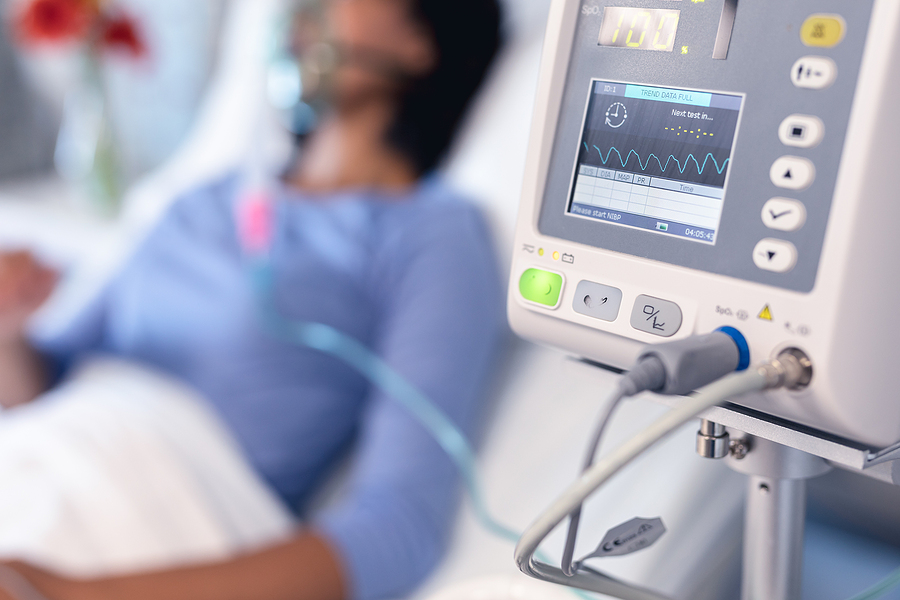
Honestly? By getting comfortable with being uncomfortable. I trained as an intensivist. In the ICU, you assess, you diagnose, you act and the monitor tells you within minutes whether you were right. That feedback loop is what makes clinical decision-making feel solid, even under extreme pressure.
Institutional leadership has no such loop. The biggest decisions I make now about AI, about workforce redesign, about what we invest in and what we stop doing, have feedback cycles of 3 to 5 years. I will not know whether I was right until long after the decision is irreversible. That requires a completely different relationship with uncertainty. Not resolving it but governing it, being transparent about what you know, what you do not know, and what you are choosing to protect even without proof. I think that is the hardest skill healthcare asks of its leaders today, and it is one that clinical training does not teach you.
The keynote lecture “Leadership in healthcare in times of transition” will take place at the Euroanaesthesia Congress 2026 on Saturday, 6 June at 09:30–10:00 CEST in room DELTA A-B.
References
- Looi JCL, Allison S, Kisely SR, Bastiampillai T. Physician leadership during the current crisis in healthcare: A perspective drawn from anthropological and clinical leadership research. Australas Psychiatry. 2023;31(4):463-465. doi:10.1177/10398562231169128 https://journals.sagepub.com/doi/10.1177/10398562231169128
- Xu W, Suo Z, Qu Y, Zhou B, Zheng Y and Ni C (2025) Retrospective and prospective: insights from a decade of anesthesiology trends for perioperative health care. Front. Med. 12:1547487. doi: 10.3389/fmed.2025.1547487 https://www.frontiersin.org/journals/medicine/articles/10.3389/fmed.2025.1547487/full
- Bellini V, Priolo S, Bignami E. The central role of the anesthesiologist in operating room management: toward an integrated clinical-organizational-technological paradigm. J Anesth Analg Crit Care. 2025;5(1):44. Published 2025 Jul 14. doi:10.1186/s44158-025-00263-w