







Newsletter
Anesthesia Intelligence: Where Predictive Care Meets Human-Centered Innovation
This article was sponsored by Philips.
How predictive monitoring, advanced technology, and interdisciplinary collaboration can create a safer, more personalized, and human-centered perioperative care ecosystem
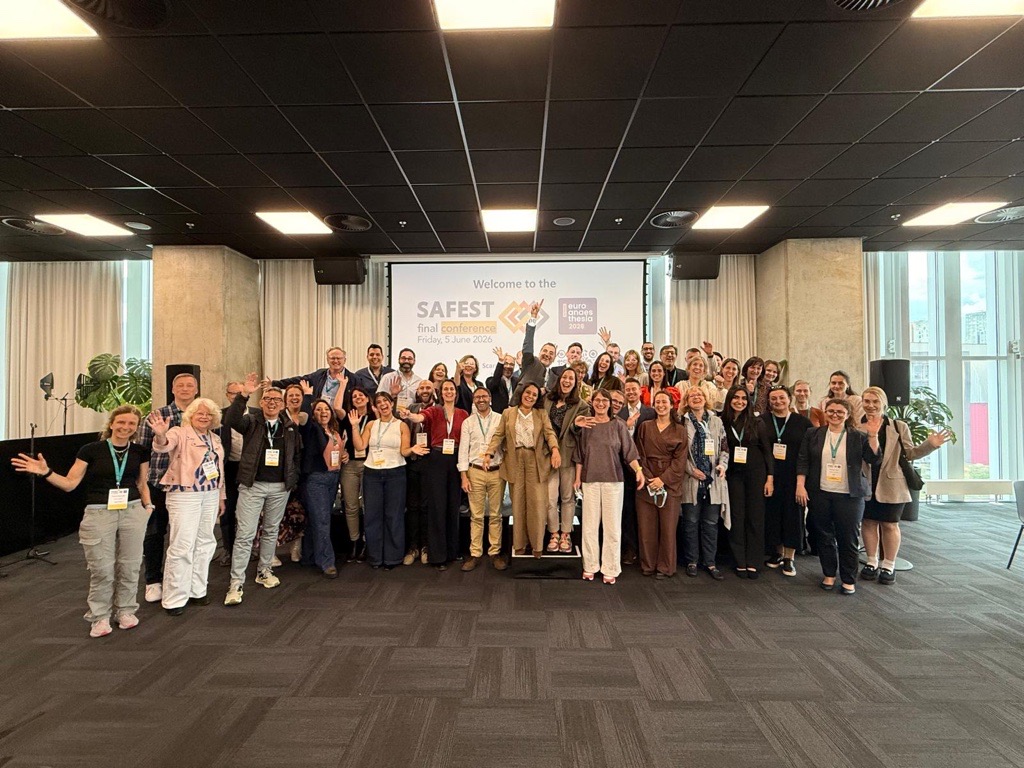
The future of perioperative care is no longer a distant vision. Across Europe and beyond, advances in artificial intelligence (AI), predictive analytics, wireless monitoring, and digital health are transforming how anesthesiologists and perioperative teams care for patients. Yet, as highlighted during a two-day design-thinking workshop hosted by Philips, the operating room (OR) of the future will not be defined by technology alone. The workshop brought together a multidisciplinary team of clinicians, researchers, educators, and MedTech professionals from hospitals, universities, and industry to co-create a shared vision for perioperative care and patient monitoring over the next decade and translate this vision into actionable recommendations for clinical practice, research, education, and technological innovation. The operating room of the future will be characterized by a seamless partnership between human expertise and intelligent systems, working together to deliver safer, more efficient, and highly personalized care.
From reactive monitoring to predictive care
For decades, patient monitoring has served as the cornerstone of safe anesthesia practice. Modern monitors provide continuous assessment of cardiovascular, respiratory, neurological, and metabolic parameters, enabling clinicians to detect deterioration and intervene promptly (Saugel et al., 2025). However, despite remarkable technological progress, current monitoring systems remain largely reactive. Clinicians are often alerted after physiological instability has already begun, leaving little opportunity for true prevention.
Workshop participants identified several persistent challenges that continue to limit the effectiveness of current monitoring environments. These include alarm fatigue, fragmented information systems, cognitive overload, lack of interoperability between devices, and inadequate feedback regarding patient outcomes. Healthcare professionals frequently find themselves navigating multiple screens, interpreting vast amounts of data, and managing alarms that may have limited clinical relevance. This environment can distract clinicians from what matters most: understanding the patient’s condition and making timely, informed decisions.
The consensus vision was clear. Future monitoring systems must evolve beyond data collection toward predictive and context-aware support. Rather than simply reporting what is happening now, intelligent monitoring technologies should help clinicians anticipate what might happen next and support proactive intervention before complications develop.
The intelligent operating room
Participants envisioned a hypermodern operating room in which all relevant patient data flow continuously across the entire perioperative pathway, from preoperative assessment and prehabilitation through surgery, postoperative recovery, hospital discharge, and even home monitoring. Within this connected ecosystem, patient information would no longer exist in isolated silos but would be integrated into a single, coherent clinical picture.
Advanced wireless sensors and wearable devices may play a central role in enabling this vision. Continuous monitoring beyond the operating theatre can provide valuable insights into patient recovery trajectories and allow earlier recognition of complications. Predictive analytics powered by AI should analyze physiological trends, historical data, and patient-specific characteristics to identify risks before they become clinically apparent.
Future monitoring platforms may incorporate intelligent clinical assistants capable of delivering contextual summaries, highlighting critical risks, and offering evidence-based recommendations tailored to the specific surgical procedure and patient condition. Instead of overwhelming clinicians with data, these systems will act as intelligent filters, presenting the right information to the right professional at the right moment.
Participants also described the concept of a “single pane of glass” interface; a unified display bringing together information from monitors, anesthesia workstations, electronic health records, wearable devices, and decision-support systems. Such integration could substantially improve situational awareness while reducing the cognitive burden currently experienced by perioperative teams.
Human-centered technology
Despite the enthusiasm surrounding AI and digital innovation, one message resonated throughout the workshop: technology must augment clinicians, not replace them (Shu et al., 2025). Participants consistently emphasized that effective monitoring requires clinical context, professional judgment, and human interpretability. Trust in technology will depend not only on technical performance but also on transparency, usability, and explainability.
Future monitoring systems must therefore be designed around the realities of clinical practice. User-centered design, involving healthcare professionals throughout development and implementation, will be essential. Technologies that increase workload, disrupt workflows, or generate excessive complexity are unlikely to gain widespread acceptance regardless of their technical sophistication.
The operating room of the future should therefore be understood as a human-centered environment where technology and human insight collaborate seamlessly. Intelligent systems should provide prediction, automation, and data integration, while clinicians contribute critical thinking, ethical judgment, situational awareness, empathy, and decision-making capabilities that remain uniquely human.
Personalized and preventive perioperative medicine
Another important theme emerging from the workshop was personalization. Future monitoring systems are expected to support truly individualized perioperative care pathways. Rather than applying standardized approaches to all patients, clinicians could increasingly use predictive models to tailor interventions based on unique physiological characteristics, risk profiles, and treatment goals.
This evolution aligns with the broader movement toward preventive healthcare. By combining continuous monitoring, predictive analytics, and real-world outcome data, clinicians may be able to identify vulnerable patients earlier, optimize preoperative preparation, and prevent complications before they occur. The distinction between monitoring and decision support will gradually blur as systems become capable of delivering actionable insights linked to patient-specific risks and outcomes.
Monitoring extends the intelligent perioperative ecosystem into the patient’s daily environment. Continuous data from wearable devices and home-based sensors can inform prehabilitation strategies and personalized anesthesia planning, while postoperative recovery monitoring generates real-world outcome data, supports early complication detection, and enables proactive, data-driven follow-up. This creates a smooth continuum of care in which monitoring supports clinical decision-making across the entire perioperative journey.
The result is a more proactive perioperative care model that extends beyond surgical procedures alone. Monitoring becomes a continuous process supporting patient wellbeing across the entire care journey, enhancing both safety and recovery.
New professionals for a new era
Perhaps one of the workshop’s most innovative contributions was its focus on workforce development. Participants recognized that achieving the full potential of future monitoring technologies requires new competencies and, potentially, entirely new professional roles (Cecconi et al., 2025).
Among the most notable concepts was the emergence of the “e-clinician” as a hybrid healthcare professional who combines clinical expertise with digital, data, and AI-related competencies. These professionals would serve as translators between healthcare practice and technological innovation, helping organizations implement new solutions safely and effectively while supporting colleagues in their adoption.
Additional future roles may include AI specialists, workflow analysts, implementation experts, and learning coaches who facilitate continuous professional development within increasingly digital healthcare environments. While traditional clinical expertise remains indispensable, future perioperative teams will require greater digital literacy, data interpretation skills, and understanding of human-technology interaction.
Education as the foundation
The workshop participants identified education as perhaps the most critical enabler of future progress. New technologies alone will not transform patient care if healthcare professionals lack the knowledge, confidence, and skills required to use them effectively.
Educational curricula in anesthesiology, nurse anesthesia, perioperative care, and critical care medicine will need to evolve accordingly. Training programs should increasingly incorporate AI literacy, predictive analytics, digital health concepts, human-technology interaction, and innovation readiness. Simulation-based learning, virtual reality, augmented reality, and immersive educational technologies may provide valuable opportunities for developing these competencies in realistic clinical environments (Stenseth et al., 2025).
Equally important is the development of learning cultures that encourage reflection, collaboration, experimentation, and psychological safety. Healthcare professionals must be empowered not only to use technology but also to participate actively in its design, evaluation, and continuous improvement.
Building the future together
The workshop highlighted a reality increasingly recognized throughout healthcare innovation: meaningful transformation cannot be achieved by any single stakeholder group working in isolation. The future of patient monitoring will depend on close collaboration between anesthesiologists, nurse anesthetists, engineers, educators, researchers, industry partners, and healthcare organizations (van Loon et al., 2026).
As technologies become more intelligent and more deeply embedded within clinical workflows, interdisciplinary cooperation becomes not merely beneficial but essential. Engineers require clinical insights to develop relevant solutions. Clinicians need opportunities to shape innovation. Educators must prepare future professionals for emerging competencies. Researchers must generate evidence regarding safety, effectiveness, and implementation. Together, these groups can ensure that technological innovation translates into genuine improvements in patient outcomes.
Looking ahead
The operating room of the future is a hypermodern, intelligent, and human-centered environment where technology and human insight seamlessly collaborate as an integral part of safe, efficient, and personalized care. It is an ecosystem characterized by predictive monitoring, integrated decision support, continuous perioperative surveillance, and preventive patient management.
However, the workshop’s most important conclusion may be its simplest: technology alone is not enough. Realizing this future requires sustained investment in education, interdisciplinary collaboration, research, and new hybrid professional roles that bridge clinical expertise and technological innovation. The true transformation of perioperative care will occur not when machines become smarter, but when healthcare professionals and technology work together more effectively than ever before.
This represents both an opportunity and a responsibility. The future of perioperative monitoring is being shaped today, and anesthesiology professionals must remain at the center of that journey, ensuring that innovation ultimately serves its most important purpose: improving the safety, experience, and outcomes of every patient entrusted to our care.
Author: Fredericus H.J. van Loon: associate professor and nurse anesthetist at Fontys University of Applied Science, Faculty of Perioperative Care and Technology, Institute of People and Health Studies
References
van Loon, F. H. J., de Wilde, M. A., & Dierick-van Daele, A. T. M. (2026). Comment on: “advances in automated anesthesia: a comprehensive review” by “Xiuding Cai.” Anesthesiology and Perioperative Science, 4(1), 11.
Cecconi, M., Greco, M., Shickel, B., Angus, D. C., Bailey, H., Bignami, E., Calandra, T., Celi, L. A., Einav, S., Elbers, P., Ercole, A., Gómez, H., Gong, M. N., Komorowski, M., Liu, V., Park, S., Sarwal, A., Seymour, C. W., Zampieri, F. G., … Bihorac, A. (2025). Implementing Artificial Intelligence in Critical Care Medicine: a consensus of 22. Critical Care, 29(1), 290.
Saugel, B., Buhre, W., Chew, M. S., Cholley, B., Coburn, M., Cohen, B., De Hert, S., Duranteau, J., Fellahi, J.-L., Flick, M., Guarracino, F., Joosten, A., Jungwirth, B., Kouz, K., Longrois, D., Buse, G. L., Meidert, A. S., Rex, S., Romagnoli, S., … Zarbock, A. (2025). Intra-operative haemodynamic monitoring and management of adults having noncardiac surgery: A statement from the European Society of Anaesthesiology and Intensive Care. European Journal of Anaesthesiology | EJA, 42(6). https://journals.lww.com/ejanaesthesiology/fulltext/2025/06000/intra_operative_haemodynamic_monitoring_and.9.aspx
Shu, X., Zhu, Y., Liu, X., Li, Y., Yi, B., & Wang, Y. (2025). Applications of artificial intelligence in anesthesiology. Anesthesiology and Perioperative Science, 3(4), 48.
Stenseth, H. V., Steindal, S. A., Solberg, M. T., Ølnes, M. A., Sørensen, A. L., Strandell-Laine, C., Olaussen, C., Farsjø Aure, C., Pedersen, I., Zlamal, J., Gue Martini, J., Bresolin, P., Linnerud, S. C. W., & Nes, A. A. G. (2025). Simulation-Based Learning Supported by Technology to Enhance Critical Thinking in Nursing Students: Scoping Review. Journal of Medical Internet Research, 27, e58744.
This article was sponsored by Philips