

Login to myESAIC Membership
Back

About

The ESAIC is dedicated to supporting professionals in anaesthesiology and intensive care by serving as the hub for development and dissemination of valuable educational, scientific, research, and networking resources.


Back

Congresses

The ESAIC hosts the Euroanaesthesia congresses that serve as platforms for cutting-edge science and innovation in the field. These events bring together experts, foster networking, and facilitate knowledge exchange in anaesthesiology, intensive care, pain management, and perioperative medicine. Euroanaesthesia is one of the world’s largest and most influential scientific congresses for anaesthesia professionals. Held annually throughout Europe, our congress is a contemporary event geared towards education, knowledge exchange and innovation in anaesthesia, intensive care, pain and perioperative medicine, as well as a platform for immense international visibility for scientific research.


Back

Professional Growth

The ESAIC's mission is to foster and provide exceptional training and educational opportunities. The ESAIC ensures the provision of robust and standardised examination and certification systems to support the professional development of anaesthesiologists and to ensure outstanding future doctors in the field of anaesthesiology and intensive care.


Back

Research

The ESAIC aims to advance patient outcomes and contribute to the progress of anaesthesiology and intensive care evidence-based practice through research. The ESAIC Clinical Trial Network (CTN), the Research Groups and Grants all contribute to the knowledge and clinical advances in the peri-operative setting.


Back

EU Projects

The ESAIC is actively involved as a consortium member in numerous EU funded projects. Together with healthcare leaders and practitioners, the ESAIC's involvement as an EU project partner is another way that it is improving patient outcomes and ensuring the best care for every patient.


image of a stethoscope laying on the european flag
Back

Patient Safety

The ESAIC aims to promote the professional role of anaesthesiologists and intensive care physicians and enhance perioperative patient outcomes by focusing on quality of care and patient safety strategies. The Society is committed to implementing the Helsinki Declaration and leading patient safety projects.


Back

Sustainability

The ESAIC is committed to implementing the Glasgow Declaration and drive initiatives towards greater environmental sustainability across anaesthesiology and intensive care in Europe.


Back

Partnerships

The ESAIC works in collaboration with industry, national societies, and specialist societies to promote advancements in anaesthesia and intensive care. The Industry Partnership offers visibility and engagement opportunities for industry participants with ESAIC members, facilitating understanding of specific needs in anaesthesiology and in intensive care. This partnership provides resources for education and avenues for collaborative projects enhancing science, education, and patient safety. The Specialist Societies contribute to high-quality educational opportunities for European anaesthesiologists and intensivists, fostering discussion and sharing, while the National Societies, through NASC, maintain standards, promote events and courses, and facilitate connections. All partnerships collectively drive dialogue, learning, and growth in the anaesthesiology and intensive care sector.


Back

Guidelines

Guidelines play a crucial role in delivering evidence-based recommendations to healthcare professionals. Within the fields of anaesthesia and intensive care, guidelines are instrumental in standardizing clinical practices and enhancing patient outcomes. For many years, the ESAIC has served as a pivotal platform for facilitating continuous advancements, improving care standards and harmonising clinical management practices across Europe.


Back

Publications

With over 40 years of publication history, the EJA (European Journal of Anaesthesiology) has established itself as a highly respected and influential journal in its field. It covers a wide range of topics related to anaesthesiology and intensive care medicine, including perioperative medicine, pain management, critical care, resuscitation, and patient safety.


Back

Membership

Becoming a member of ESAIC implies becoming a part of a vibrant community of nearly 8,000 professionals who exchange best practices and stay updated on the latest developments in anaesthesiology, intensive care and perioperative medicine. ESAIC membership equips you with the tools and resources necessary to enhance your daily professional routine, nurture your career growth, and play an active role in advancing anaesthesiology, intensive care and perioperative medicine.


Membership opportunities
at the ESAIC

woman showing another woman something on her computer in a hospital

Newsletter

Towards more inclusive and sustainable research at ESAIC - Integrating Sustainability and DEI into ESAIC Grants

The European Society of Anaesthesiology and Intensive Care (ESAIC) is taking an important step forward in redefining how research grants are evaluated. Beyond scientific rigour alone, new efforts are underway to ensure that sustainability and diversity, equity, and inclusion (DEI) are firmly embedded within research funding and assessment processes. 

The rationale for this change  

Healthcare research reaches far beyond the clinical setting. Its impact extends to the environment and broader societal well-being. In fields such as anaesthesiology and intensive care, where clinical innovation often requires significant resources and disparities in care persist, there is a growing responsibility to act thoughtfully. 

By integrating sustainability and DEI into grant assessment, ESAIC aims to promote responsible research practices that consider environmental impact and ensure inclusive, representative science.  

A new approach to grant assessment 

One of the challenges identified by the ESAIC Research Committee is that both applicants and reviewers can struggle to understand how to meaningfully address sustainability and DEI in grant proposals.  

To address this, a structured yet flexible framework is being introduced, that combines guidance, training, and revised evaluation criteria. 

 A narrative approach with traffic-light indicator 

In addition to relying on robust scoring systems, ESAIC proposes a more thoughtful, context-sensitive evaluation. 

Applicants will provide short narrative statements, explaining: 

  • How DEI considerations are reflected in their research team and study design 
  • How environmental sustainability has been incorporated into the project 

These narratives will be assessed using a simple flagging system

  • Green – strong, meaningful engagement 
  • Amber – partial consideration with room for improvement 
  • Red – not addressed 

Projects that fail to adequately address both sustainability and DEI will not progress beyond the evaluation process.  

What does this look like in practice? 

In practical terms, ESAIC’s approach builds on its existing declarations, notably the ESAIC Glasgow Declaration on Sustainability in Anaesthesiology and Intensive Care. and the Mellin-Olsen Declaration on Diversity, Equity, and Inclusion. These frameworks provide a foundation for applicants to reflect on how their research can contribute to more sustainable and inclusive healthcare. 

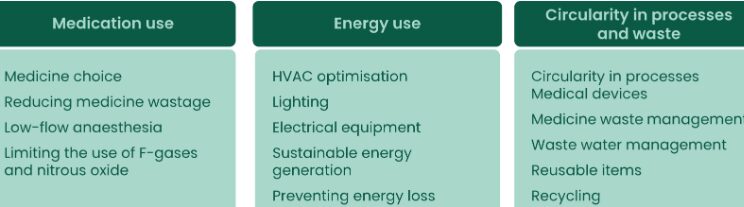
For sustainability, in line with the Glasgow Declaration, applicants are encouraged to consider the first three scopes: 

image 2

Figure 1: Priority areas to improve environmental sustainability within anaesthesiology and intensive care (not all the priorities listed in Figure 1 are discussed in the ESAIC Glasgow Declaration on Sustainability in Anaesthesiology and Intensive Care 

On top of  

  • Reducing travel through virtual collaboration where possible 
  • Minimising waste and resource use throughout the project lifecycle 
  • Designing protocols with long-term environmental and clinical impact in mind 

For DEI, guided by the principles of the Mellin-Olsen Declaration, examples include: 

  • Diversity – ensuring representation across backgrounds, identities, and experiences  
  • Equity – addressing barriers to provide fair opportunities for all  
  • Inclusion – fostering environments where everyone feels valued and able to contribute 

It also aligns with broader goals such as improving geographical equity—ensuring that researchers from less-resourced regions have fair opportunities to participate and succeed. 

A pragmatic and inclusive vision 

ESAIC recognises that sustainability and DEI are complex and context dependent. The aim is not to create a checklist or penalise researchers, but to encourage reflection, transparency, and continuous improvement. 

Evaluation will therefore focus on how well each proposal engages with relevant challenges within its own context, considering project scale and available resources.  

Ultimately, this initiative is about shaping a research culture that values not only scientific excellence but also inclusivity, responsibility, and long-term impact. 

By embedding sustainability and DEI into funding decisions, ESAIC is helping to ensure that research in anaesthesiology and intensive care contributes to a more equitable and sustainable future—for both patients and society. 

Authors  

  • Prof. Mark Coburn – ESAIC Research Committee Chair 
  • Dr. D Nuala Lucas – ESAIC Research Committee member 
  • Prof. Georgia Tsaousi – ESAIC Research Committee member 
  • Prof. Carolyn Weiniger – ESAIC Research Committee member 
  • On behalf the ESAIC Research Committee 

For more information please contact: research@esaic.org  

Related news

See all news